In my 5th grade classroom, we're studying classification systems. The students are learning all about Carl Linnaeus and big words like taxonomy and phylum. We started the lesson with shoes, classifying the student's shoes into a hierarchy from their Kingdom (they're all shoes) to their Phylum, Class, Order, Family and then finally, to the exact Genus and Species of each shoe -- they're red Nikes with pink laces, or as we came to name them, Pinkosis nikiderma.
Next, we introduced dichotomous keys -- the classification system that does exactly what its name implies -- divides things into twos. Again, we used shoes. We divided our shoes into those with laces and those without. Then we divided the without laces pile into those with leather and those without. Next we divided the without leather into white and not white shoes until eventually, working our way through all the divided piles, we ended up with 16 different types of shoes to match the 16 different students each with their own name and distinguishing features and characteristic.
"It's all about the name," I told them. "It's how we make sense of the world around us. We name it and the name becomes the thing and the thing then becomes the name. An individual. Unique and beautiful."
I like dichotomous keys. They make sense to me. Something is either this or its not, no middle ground, no ifs ands or buts. It is this or it isn't. A plant either flowers or it doesn't. A animal either has feathers or it doesn't. It's kind of like a puzzle, one concrete detail after the next until you end up at the thing itself, named and solid and uniquely it's own entity.
I think a dichotomous key would be handy for a person like myself who is gay, but who lacks "gay-dar" -- the ability to spot another gay person simply by their appearance or perhaps their energy.
I'm not sure why my gay-dar never developed or if I even had it at all, but I've always struggled with "knowing" if someone is or isn't like me -- in the same Family, so to speak.
That's why I think those of us who are "gay-dar impaired" should create a dichotomous key (or perhaps it could be called a "dyke" -chotomous key) -- a handy chart for identifying if you are or aren't gay or lesbian.
The chart might look something like this:
Two columns with separate headings -- Lesbian versus Not-Lesbian
On the Lesbian side the division would continue -- Owns a Truck; Does not own a Truck (that would be me...though it's an SUV and close to a truck)...followed by Owns a Large Dog; Does not own a Large dog.
Here's where the fluidity of the key would get interesting. I once was a lesbian with truck and a dog and now I'm a lesbian sans truck and no dog (though one is destined for my future). The usefulness of the key would be that you could flip from one side of the dichotomy to the other and still, in fact, stay on the Lesbian side. Your sexual identity would not change though your attributes would -- like a tulip that lost its leaves is still, according to the key, a tulip.
But I digress.
Continuing on, the chart would reflect other stereotypical markers --Androgynous/Non-androgynous; Short Hair/ Not Short Hair; Vests/No Vests; Fleece/No Fleece; Softball player/Not a Softball Player; Carharts/No Carharts -- until you get down to the finest details that would distinguish ME as an individual lesbian -- unique and beautiful -- but still, in essence, a lesbian.
For instance, Lesbian with Children/Lesbian without Children. At a time when lesbians and gay men are reproducing (however oxymoronic that may sound) as fast as rabbits, this category winnows out whole groups of lesbians who must now be distinguished by something other than their offspring or adopted offspring.
And so I continue: Married/Not Married; Job in the Trades/No Job in the Trades; Fashion Sense/No Fashion Sense (an important distinguishing feature in the lesbian community and perhaps even in the gay community...though maybe not so much as I've rarely met a gay-man who didn't have a fashion sense or act as if he did); Decorating Sense/No Decorating Sense (similar to Fashion Sense -- it distinguishes the Lesbians who live in purple houses with green trim from those who don't). Vegetarian/Non-vegetarian -- which can be further split into Vegan/Not Vegan.
Cultural Divisions -- Indigo Girls Music Collection/No Indigo Girls; Theater-going/Non-theater-going; Opera season ticket holder/Non-Opera season ticket holder; WNBA season ticket holder/Non-WNBA season ticket holder.
Political divisions are important as well: Democrats/Not Democrats; Radical Feminists/Not Radical Feminists, which leads right into religious distinctions -- Religious/Not Religious; Traditional Faiths/Non- Traditional Faiths from which many further divisions can be made -- Woo-woo beliefs (like Wiccan or New Age)/Non-woo-woo beliefs (like Catholics and Baptists).
I could go on, but the idea would be to sell these little Field Guides -- small hand-held books or maybe even small handheld electronic versions -- that let you calculate your observations, work your way through the key, until you figured out that yes, that woman in the short skirt wearing make-up and high heeled shoes is really a lesbian (of the category non-androgynous, long- haired, non-softball playing, truck-owning variety).
Such a key would not only help gay people like me who suffer from gay-dar dysfunction, but it might help straight people avoid embarrassing situations like the ones I've experienced:
Example#1
I'm at the University Bookstore. It's summer. It's 90 degrees outside and I am in shorts and a tank top, sandals on my feet. I walk into the restroom and a woman, who is just opening the door to come out as I'm pushing the door to go in, stops in her tracks and says, "You can't come in here! This is the woman's restroom!"
I have very broad shoulders. I have short hair. Sometimes I shave my legs, but mostly I don't. I have long hair on my legs. It's dark hair. I have muscles. I am tall. I wear tank tops that have room in them, not tight-fitting spaghetti strapped numbers that look more like underwear than shirts. My shorts are baggy-ish and the hem hits just above my knees. I can see how she'd make the mistake, glancing merely at the features that say man, not man. I fell into the category of man in her eyes and all else was disregarded -- my breasts for one, my earrings (though that doesn't always help) for another.
If she'd had a handy-dandy hand-held key, she could hold up the device, have it scan me and then say, "Have a nice day, sweetie" instead of insulting me with her ignorance.
Or
Example #2
I'm meeting prospective families at our school's open house. We call it Wooing Night and our job is to charm parents into sending there kids to our school. I'm talking with a mother of a precocious 4th grader who interrupts our conversation by twirling on her mother's arm.
"I see you're married," the mother says, pointing to my wedding ring.
"Yes, I am," I say, avoiding the details.
"What work does your husband do?" she presses on.
"I don't have a husband," I say, "but my partner teaches fourth grade."
Wedding Ring - No Wedding Ring; Husband - No Husband -- it would only take seconds for the prospective parent to assess me and then avoid my frustration and anger that I must, yet again, question the dominant culture's assumptions of me.
Of course, we'd have to include the category of Likes Labels/Doesn't Like Labels, but even the non-label-lovers could see the value of such a key I would think. Not only would people know you better, but maybe then all the negatives and bigotry that come from assuming they KNOW your labels would end.
It's all in the name, I say -- we name the world to understand it. How much happier we might all be if we could just take the guessing out of it.
Lesbionic specialous. A rare, yet beautiful flower.
Tuesday, October 31, 2006

Sunday, October 15, 2006
Rivers and Reflections: The need for eddies in education

I've just returned from a writing retreat at the Environmental Learning Center in the North Cascades. A beautiful setting, amazing weather, and three very different, but equally talented writers/instructors.
I have many thoughts about the retreat, which I'm certain I will write about over the course of the next few weeks, but today I find the rain particularly pleasant after a week of sunshine and mountains, lakes and fall colors.
When I woke last night to the sound of rain on our new roof, I was thankful for Ann lying next to me. Her rhythmic breathing provided a gentle back-beat to the softness of the rain and I curled up in my pillows relishing restful sleep.
The writing retreat was a mixture of awkwardness and reflection for me. I always have a hard time trying to fit into these events, searching for people with whom I can find alliance in political as well as emotional perspectives. Of course, at a nature writing retreat environmentalists are in abundance and I doubt there was a Republican among us. If there was, s/he was probably feeling more awkward than I was throughout the week.
My awkwardness stems from many things: Lack of confidence in my writing, in who I am as a person, in an inability to feel comfortable in social situations, and the need to know that I am liked and accepted by those around me. I battle it wherever I go, but this week it took me longer to figure out my place in this world of nature writers.
I don't see myself as a nature writer per se. Yes, I write of human nature and being in a wilderness setting makes me far more reflective than I am in the city, and preserving nature IS extremely important to me, but I don't see myself learning the names of plants and trees so that I might incorporate it into my writing. Still, it was exactly what I needed this week -- clean air, blue skies, water and mountains.
It is, perhaps, a need for reflection that nature provides me. My life is busy with teaching and all the whirlwinds that surround my work. We were asked, before I left, to call all of our students' families, to check in and see how they were feeling about the school and their daughters' experiences. I resisted making those phone calls for many reasons, and in the end, I didn't get around to it. During the week, the Dean of Faculty was going to call me and ask me to make the phone calls from my writing retreat. Luckily, my teaching partner stepped in and not only prevented the Dean from calling me, but took it upon herself to make the calls.
Finding this out made me realize how often my time for reflection is interrupted by obligation and soon I am caught up in completing this task and that, filling my time with a long list of jobs I must complete before I permit myself to just sit and reflect. Often that permission never comes.
And then I think about what lessons we are teaching the girls. When they see us run around and frazzle our way through a day, what message are we sending them? To do is more important than to rest? A full plate makes your life more meaningful than one filled with select and thoughtful choices?
Often I hear students claim that they are bored. More and more I'm thinking it isn't about boredom, it's about not being comfortable with reflection, with one's own thoughts, with the fullness of our own presence in the world. Perhaps that is what I was feeling at the beginning of this week -- an uncomfortableness with myself not being busy, not having a task to complete, not having an obligation other than the ones I made for myself.
I was never bored. I've learned over the years that boredom is an excuse more than a state of mind, but I often found myself stymied by what to do next. Write? Read? Hike? Nap? Find someone to talk with? I moved sporadically through the empty times when we were not required to be in a workshop or a lecture. I found it difficult to ground myself within the time where I was without obligation.
Eventually, a rhythm developed and I often chose to be alone, on a hike or by the lake reflecting or writing, reading or unintentionally meditating with my eyes closed to the October sun. When I got back home yesterday, Ann was out with our friends. She left a note telling me when she'd return and while I was disappointed she wasn't here to greet me, I was thankful that my re-entry into the city didn't require too many expectations.
I made the mistake, though, of checking my school email where about 70 messages slapped me with the reality of my work. There were meetings and parent communications, there were announcements about workshops and contacts from community partners with questions about upcoming field trips. I couldn't read them all. I scanned, only stopping at the ones I thought might be of interest.
During the writer's retreat, we sat by (and in) a creek during one workshop. We were asked to sit quietly with our eyes closed and just listen. The water was icy on my feet, the filtered sun made patterns on my closed eyelids, and the wind moved the trees where chattering squirrels scolded us. I loved the sound of the water and soon found myself opening my eyes to watch the creek carry the water along channels of moss-covered rocks, over submerged logs, and down into swirling eddies lined with yellow and brown leaves.
Water in a creek moves constantly, but unlike my work, it rests along the way. It pools behind boulders, it moves upstream and then back down slowly into an eddy until finally the pull of the creek gathers it back into a push downstream. This is what I wish for in my work life. I am not afraid to move downstream. I am not afraid to push and roar and even thunder, but I need the eddies, too. I need the time to swirl and turn, to be caught in relaxing -- where the sun can catch me, where detritus can collect, where I can wait for the stream to pull me back in and push me on over the next rocky length.
This then is my charge. To carve out my eddies of reflection. To model such rest and contemplation for my students. To help them see that boredom is an invitation to feel one's presence in the flow of the world. In it's light. In it's reflection. It is, at times, dark and twisting, but more than anything, it is necessary. The eddy is as important to the creek as the rapid water over smooth, time-worn rocks.
Tuesday, October 03, 2006
My Footprint

For the past three months now, The Sun magazine has sent me postcards and letters and extra wrappings on my magazine warning me that my subscription is about to run out.
Today it did. I received my copy in this afternoon's mail along with 3 catalogues, 2 coupon flyers, and another letter from The Sun magazine telling me this is it.
I'm torn. I really love the magazine -- the beautiful photography, the thoughtful writing, the ad-free pages -- but I'm also trying to "simplify", which may see odd as we just finished remodeling our house, adding 950 square feet to our existing 640 square feet.
I'm torn because I'm trying to reduce my "ecological footprint" or the impact I have on the environment. This was of great consideration when we remodeled. "Green" homes, or homes that are environmentally friendly get ratings. 5 stars is the highest rating a green home can get. We have 4. We didn't have the money for a gray-water system or solar panels, but everything else meets the environmentally friendly code.
While our house is bigger, it's by no means extravagant. In fact, the cover of a magazine I saw in the grocery store exclaimed, "How to live in small spaces: 1700 square feet or less." Wow, we lived in 640 square feet for 4 years and in an attempt to "save" the house (built in the 1900s) we remodeled and now live in 1590 square feet. The new house just built on the corner last year boasts a whopping 3500 square feet and the house up the street called the "ghetto mansion" by the locals is 6000 square feet. What would one do with all of that space? Fill it up with magazines?
We also own only one car. Granted, it's a SUV, but we drive it minimally and both of us either ride our bikes to work or I generally walk to work while Ann carpools with a teacher-friend.
We keep our heat at 65 degrees and I challenged myself this year to not turn it on until October 1. We made it until today (October 3) because it is colder than 65 degrees outside and the house has a chill. Still, 65 degrees is pretty good and since we're gone most of the day, it only comes on for a few hours in the evening.
We compost our food scraps, we recycle religiously, and all and all, we really don't overconsume with purchases (though we have had to buy more furniture for our now larger house).
We buy organic with fresh vegetables and fruit delievered to our door every other week and a trip to the local farmer's market when we need extras. And yes, we ride our bikes to market.
Truly, we live mindfully, but the decision to re-up my subscription to The Sun was a tough one for me. Yes, I like the magazine, but it feels like an indulgence. I could just get on my bike and pedal to the library four blocks away (or walk, for that matter) and read the monthly magazine there.
While the magazine boasts of no ads, every month they sent me a card in the mail urging me to get my friends to subscribe or offering me a chance to resubscribe early at a slightly reduced rate.
That's a lot of paper. That's a lot of energy.
My mother has a list at home of all the catalogues she receives. Diligently, and only as my mother could, she has called the various businesses who send her these catalogues and asked the companies to stop sending them. By each catalogue name on the list is the phone number of their customer service office and little check marks tallying the number of times she's had to call them.
Some checks go on for quite awhile.
If I wanted to save paper, I could do the same...call all the companies who send me catalogues and tell them to knock it off, but when I look at my mother's efforts, I get discouraged. I don't have that kind of time to call and complain. (Not that my mother does, the busy Democrat that she is!) Instead, it's easier not to resubscribe.
So, I decided last month that I would not renew my subscription and when the last one arrived today, I read the article by Bill McKibben and had to chuckle. His article, entitled "Dream A Little Dream," is about reforming our supersized society, about considering the costs to our planet of overconsumption.
He writes: "The Achilles' heel of consumer society is that it hasn't made us as happy as it promised it would. Although Americans have tripled their prosperity since the mid-1950s, the percentage who say they're 'very satisfied' with their lives has declined...We've pursued the American Dream to no real apparent end."
He goes on to talk about global warming and the shift away from farming to technology and gluttonous consumption.
I love reading this. I love hearing someone say what needs to be said, but when I hold the recycled paper of the magazine in my hands, I feel that thin line between hypocrisy and conviction and cringe a bit.
Recycled paper is better than non-recycled, but still, the energy it takes to recycle it, the energy it takes to send out little postcards every month or a letter reminding me that my subscription is almost gone is immense.
Yet, here is my dilemma: If I do not subscribe to the magazine, they will lose money. If they lose money, the may not be able to publish their magazine. While the loss of Newsweek or Time or those ghastly rags at the checkout stand would be an actual blessing, the loss of the information published in The Sun would be devastating...or the loss of Mother Jones or even the now trendy and woo-woo-fied Utne Reader.
Still, it feels dishonest to me to be reading an article about reducing my consumption in a magazine I pay to consume...in a magazine that consumes resources...in a magazine that uses energy to consume resources.
But then I think about how many other people subscribe to The Sun and Mother Jones and The Atlantic Monthly, and all those other people who subscribe to Newsweek and Time, or worse, People. Will my cancelling a subscription to one magazine make a difference?
Now you see the quandary. How does one live simply in such a complex puzzle of American society?
I guess it's by one magazine at a time.
Friday, September 29, 2006
On Breathing
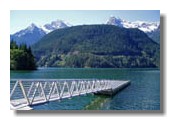
Driving behind the ambulance at 1o:30 last night, I was thinking about all the things I miss living back in the city. First and foremost, I miss the stars. Even as we wound our way through the black mountain highway, the ambulance lights flashing in panic in front of me, I could see stars in the darkness overhead. Millions of stars. Billions of stars. "Do you think we'll get to see a star supernova?" a student asked me the night before. "Possibly," I answered skeptically.
But a supernova didn't really matter. What mattered right then, right when I found myself looking up more than following the road, was that billions of stars were out there even if I couldn't see them most nights of my life.
These past few days we've spent with our 5th grade class of girls at the North Cascades Institute's Mountain School, living in eco-friendly lodges, spending our days out on the trails studying the ecosystems, and enjoying nightly campfires while mosquitoes nibbled our exposed ankles. Spending three days in the mountains reminded me of all those bits in my life that have vanished with city living.
Stars among them.
Tall trees, too.
Once the ambulance shut off its lights, the trees surrounded me in a shadow of blackness that felt mesmerizing, comforting. At night at the Institute, after all the girls were fast asleep, I'd step out onto the patio of our lodge and look out to the wall of trees nestled around the feet of the magnificent peaks -- Pyramid, Colonial, and even Sauk mountain to the south. Some people say trees talk to each other, but in the mountains the trees talk to god.
But as I drove the winding road down to the hospital an hour and a half away I grew sleepy, despite the surging adreniline of just a few hours before. With my windows rolled down, I hung my head out into the night and smelled the thing I miss most about not living in the country -- the air. Mountain air. Rich. Almost heavy. The smell of dirt and heat rising from the soil and feathers and leaves and distant snow from mountainous rocks. I breathed it in again and again, willing myself awake, willing myself to stay a safe distance from the ambulance at the same time not lose myself to the stars and the trees and the fresh mountain air channelling through the car.
Millie wasn't breathing. Early that evening, Millie panicked, began to sob, hyperventilated, and the air, thick with memory, choked her every breath. We stroked her back and hands. We spoke softly and tenderly to calm her 10-year old anxiety. We wiped her tears and her snot and practiced breathing with her -- deep breaths in, deep breaths out -- but still, she gagged. She gagged on the air, on the tears, on the thought of not being able to take the next breath.
We tried a paper bag. We tried her inhaler. We tried lying her down and standing her up. We carried her to the sick bed at the camp office. We gave her oxygen. And still, each breath was stalled, blocked, prevented from filling her lungs.
We called 911. We called Millie's mother.
When the ambulance arrived, we had made our plan. I was to drive behind the ambulance carrying Millie. M., my teaching partner, and S. our other chaperone would stay behind with the girls and return, as scheduled, today. The drive to the hospital was about 70 miles along mountain roads narrow and dark. Halfway through our journey, we'd change over to another ambulance equipped with well-trained EMT's and one that could carry us all the way to the hospital.
By the time we arrived at the hospital around 11:30 p.m., Millie was breathing on her own, able to inhale her medication just enough to calm her down. I sat with her in the ER, holding her small hand and listening to the doctor talk to her about panic and anxiety and how not breathing is a vicious cycle. A sheep in wolf's clothing he called it. Much worse than it appears. A scary wolf on the outside, but just a simple sheep on the inside.
Millie understood little of his metaphor and when her mother arrived, she asked if she could go back to camp to be with her friends. Her mother laughed and looked to me. "Sorry," I said, "But once you leave in an ambulance, you can't go back until the next time."
"But they'll be no next time," Millie moaned.
"It will always be there," I try to console her. "Perhaps you can go back with your mother this spring."
But I knew that wouldn't be the same. There would be the blossoming mountain air, the budding conifers, and even more stars, but she'd be without her friends, her class, the experience of being on the mountain trail with 15 other singing 10 year olds.
At midnight, I left Millie and her mom in the hands of the doctors and the paperwork and stepped out into the parking lot trying to decide my next move. I couldn't drive back because I did not have the key to open the gate that let me drive across the dam to the other side of Diablo Lake whose shores were the home to the camp. I could check into a hotel and drive back up the mountain pass in the morning. Or, as my teaching partner encouraged, I could drive for another hour+ home to my own bed, to Ann, back to the city.
The hospital parking lot was full. An ambulance pulled into its bay and unloaded another sick patient. A young Native American man and his family sat on the curb waiting for their ride, the man's head recently stitched up, his shirt soaked in blood. He smoked furiously, his puffs curling up to the flattened stars above. He swore, he bleched again and again, he spat on the ground while a woman (sister? girlfriend?) talked on her cell phone next to him and another man (brother? friend? father?) sucked down one Coke after another, a six pack propped up next to him. The man glared at me, angry and agitated, and I lifted my chin to the stars. "Beautiful night," I nodded. "Fuck you," he mumbled.
I called Ann, opting to go home, slightly worried she'd be upset that I'd called so late. "Hello, honey," I said.
"Oh hi," she sang softly, "Are you homesick for me?"
I laughed.
Yes, I thought, just as I am homesick for the stars and the trees, and for the air we take for granted.
"I'm coming home," I sighed and then told her briefly about the events of the evening.
By the time I walked through the front door of our home, I was acclimated back to city lights and city smog and actually happy to see the maple trees that line our street. I crawled into bed and Ann snuggled up to me, warm and soft, her familiar breath against my neck.
In two weeks I'm heading back to the Institute for a writing conference, this time without students, without the responsibility for the breaths of 10 year olds. "I wish I could bottle up the air," I told Ann this morning. "I wish I could just take a slice of that wilderness and bottle it up to ground myself during the stressful times."
She smiled and kissed me on the cheek. "Remember your happy place," she suggested, referring to our recent commitment to meditate on those places where we feel at peace when our work overwhelms us.
"You'd be in that bottle, too," I told her. "You smell as good as the trees and the water and the stars." And then I sighed, one deep breath in, one deep breath out. Grounded.
Monday, September 25, 2006
Chunk o' change
I just received my Social Security statement. Intriguing points.
1. I made $11,000 less in 2005 than I did in 2004.
2. In my first job ever, way back in 1976, I made $340
3. If I wait until I'm 70 to retire, I can earn $2,201 a month
4. BUT, if I have an accident right now, I can earn $1,666 a month (note the 666)
5. In 30 years of working (messenger, bike mechanic, TV crew, and teaching) the difference between the least I earned and the most I've earned is $63,000. Seems, at first blush, a hefty sum...but then I think, I wonder what Bill Gate's SS statement looks like or Oprah's?
The gap between rich and poor -- evident and all relative, I guess.
And I think to myself, do I need more money? Honestly, no, but there feels like an injustice somewhere along the way and I just can't put my finger on it...
Okay, I've got it...I was just listening to the news. The armed forces are asking for $120 billion to "update" the military effort on the "two fronts." A General who was interviewed said it was time that we decide if we're going to have a well-trained and well-equipped ground force for generations to come.
As a teacher I ask -- isn't it about time that we have a well-trained and well-equipped citizenry?
Oh what a well-placed billion could do...
My two favorite bumper stickers to date:
If nothing changes, nothing changes!
And
I want a president who talks gooder.
Let's go to war on a third front, then we shan't have to worry about educating anyone! Shoot first, and we'll ask questions...NEVER!
Somewhere in this rant is the injustice I can't seem to put my finger on...
1. I made $11,000 less in 2005 than I did in 2004.
2. In my first job ever, way back in 1976, I made $340
3. If I wait until I'm 70 to retire, I can earn $2,201 a month
4. BUT, if I have an accident right now, I can earn $1,666 a month (note the 666)
5. In 30 years of working (messenger, bike mechanic, TV crew, and teaching) the difference between the least I earned and the most I've earned is $63,000. Seems, at first blush, a hefty sum...but then I think, I wonder what Bill Gate's SS statement looks like or Oprah's?
The gap between rich and poor -- evident and all relative, I guess.
And I think to myself, do I need more money? Honestly, no, but there feels like an injustice somewhere along the way and I just can't put my finger on it...
Okay, I've got it...I was just listening to the news. The armed forces are asking for $120 billion to "update" the military effort on the "two fronts." A General who was interviewed said it was time that we decide if we're going to have a well-trained and well-equipped ground force for generations to come.
As a teacher I ask -- isn't it about time that we have a well-trained and well-equipped citizenry?
Oh what a well-placed billion could do...
My two favorite bumper stickers to date:
If nothing changes, nothing changes!
And
I want a president who talks gooder.
Let's go to war on a third front, then we shan't have to worry about educating anyone! Shoot first, and we'll ask questions...NEVER!
Somewhere in this rant is the injustice I can't seem to put my finger on...
Sunday, September 24, 2006
Dogs in My Life

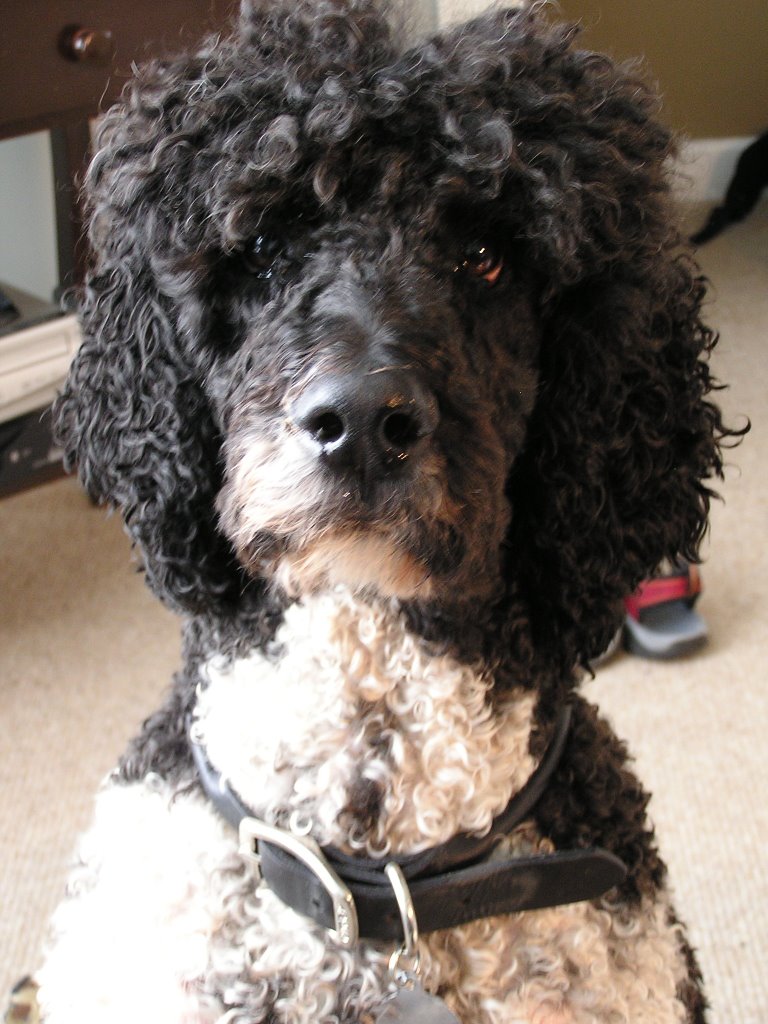
Monty, the cross-eyed Standard Poodle. And the enormous long-haired Shepard, Ben. Two weekends ago, Monty stayed with his while his human-mom went to a wedding in Spokane. For the last month of our remodel, we lived with Ben and his human parents in a large house on Lake Washington. Ann and I are not ready for a new dog in our lives, so we borrow the dogs of our friends. Last night, we took Ben for a long walk along the Lake and every morning, we see Monty and his human mom on their morning constitution.
"I think someday," I told Ann last night, "we will get tired of borrowing dogs and want one of our own."
"Yes," she said, "But for now, I like borrowing."
This is because we only have temporary obligation to feed, water, and walk the dogs. This is because we both still dream about Chester. This is because we want to try living our lives without having to worry about who will take care of the dog if we travel or go skiing or stay out late at a concert. This is because Chester's long illness and death exhausted us and we are just now figuring out how difficult that was on us. This is because we still think Chester cannot be replaced or that our love for a dog can encompass another dog the way it encompassed Chester. This is because Chester is still every other beat of our hearts.
I had another dog, Abbie, who I loved as much as Chester. In fact, one of the reasons I liked Ann so much on our first few dates is that she had a dog that looked a lot like Abbie. Of course, the more I got to know Chester, the more he didn't resemble Abbie at all, but I do think Abbie was saying, from wherever she is, "This is a good dog" and so I let myself love Chester as much as I loved her.
I still dream about Abbie, but often in those dreams she morphs into Chester. I still miss Abbie -- her smile, the way she greeted me with happy moans, the way she rolled over on her belly to get rubbed. Chester did none of those things. Well, he smiled, but differently than Abbie. But he rarely barked, rarely made noises, and never once did I see him roll over to show his belly.
But the pain of Abbie's death has faded. Now I just remember her happy and the romps we'd take to the beach or the woods, but none of the sadness of her death (I had to put her down too because of her bad back...she was in horrible pain...both she and Chester lived to be 14). I know that someday I'll feel the same about Chester -- the fun memories will replace the painful ones, but for now, I still cry early in the morning when I cannot hear the sound of his waking up, or at night, when I cannot hear the heavy sigh that signaled his saunter into dreamland.
Sometimes, when I dream about him, I can feel the weight of him pushed up against the back of my legs or around my belly -- the places he liked to sleep the most -- and I wake half believing he'll be there only to feel the sunken feeling of his absence all over again.
It's not horrible. It's not like those first few weeks when crying is what I did more than not. It's just on occasion that the feeling of missing him wells up and I have to go borrow a dog, like Monty or Ben.
Or Lulu....
 ...the other neighbor's dog who we will be walking in the afternoons now that her mom is back at work and the daughter has gone back to college.
It's good to have a dog in our lives, if only part time.
And someday, it will be full time...when we get tired of borrowing...when we can't feel the weight of Chester on our hearts as deeply as we feel it now.
Thursday, September 21, 2006
Netflix

I gave in. I signed us up for Netflix. I'm tired of another episode of Law and Order though now the reruns are ones I've not seen. It's surprising how many I haven't seen since there are some I've watched four or five times. I'm tittering on becoming a TV junkie again, but I'm trying to fight the urge...hence, Netflix.
The first DVD we rented was "Rivers and Tides", the documentary about artist Andy Goldsworthy. It was interesting. It was slow, but after spending our days with pre-adolescent children who ask a billion questions and demand our instant attention, slow was good. Slow was relaxing.
And just when I was really getting into the movie, it got stuck...froze, as DVDs tend to do in our DVD player. At least I think it's because of our DVD player. We once watched DVDs on a really expensive player and the disc froze then, too, so who knows why it does that, but it did it right at the end of Rivers and Tides and well, it kind of ruined the relaxed instrospective mood.
Still.
That sense of introspection stayed with me throughout the week especially after my Dean of Faculty confidentially informed me she was looking elsewhere for work (she doesn't make enough money as a single mom to support her two kids). Ironically, she can make about $25,000 more as an administrator in public schools. Which got me to thinking...how much could I make if I moved back to public school? I compared my current salary with Ann's public school pay scale and I was shocked that I could make $13,000 more.
It was enticing...but only briefly. Middle school teaching in the public arena means 125+ kids, 6 periods a day, and very little collaboration with colleagues. Students aren't as motivated as my private school kids and then there's all of those administrative headaches. Plus all the things we can't do, like field trips and integration of curriculum and having an actual conversation with every parent of every kid in my class.
Is that worth $13,000? Probably not, but I make enough...I don't need more. Yes, I'd like more, but I don't need more.
Yet when I found out that our Dean was working on leaving, I cried. I really like her. I really appreciate all the work she's done to get us organized and moving forward. She understands education. She sees the big picture. She's reasonable. She listens. She's helpful.
I cried for many reasons, but one of the compounding factors is that my teaching partner is also trying to leave for the very same reasons...money.
Here's where the introspection turned a darker shade.
The last time I struggled with depression, I came to understand that it was triggered by loss -- my dog had died, my teaching partner at the time took ill and left teaching leaving me to make a huge career decision, I'd had serious back surgery that limited my athletic abilities, I'd turned 40...blah, blah, blah.
Little red flags go off when I start to see the losses pile up, like cars on the freeway. Red flag -- Chester dying. Red flag -- struggle with my long-time friends (which is better, but still feels awkward). Red flag -- my teaching partner is going to leave. Red flag -- the Dean (who I consider one of my anchors) might leave.
I check myself each morning -- where's the darkness? How far away? How close? Can I touch it? Is it in me? Is it hanging over me? I measure my anger...is it reasonable, is it rational, is it justified? I count my tears -- what time of the month is it, is this menopause or is this depression? I watch for cynism-- is there a reason for it, is it coming out of my mouth at a constant rate?
It's like radar, beeping silently atop some unmanned lighthouse. How close am I to crashing onto the rocks?
Not close. I know I'm really not that close, but once you've crashed your vessel, the dangers seem much closer to the surface, much more threatening then they actually may be. If the captain of the Titanic knew when he set sail what he knew the second his ship hit the ice, would he have made different decisions?
Probably.
So I walk around with this darkness monitor, observing the needle as it lifts up when I find that two people I really like working with are going to leave eventually and wondering, will the needle stick, will the needle keep rising? Or will it ease back down, slide enough into the light that I can sleep peacefully at night?
It may seem like a stretch, but these are the real reasons I signed us up for Netflix. I don't want to be a TV junkie watching Law and Order episodes to the point where I can recite the dialogue. I want to watch Andy Goldsworthy build these incredible rock cones that tumble into heaps before he has time to finish them. I want to hear him say, "That's the way of understanding -- seeing something that was always there but you were blind to it."
That's how I feel about living with depression. Those threatening rocks on the jetty. Those dangers just beneath the surface the lighthouse keeps trying to warn me from.
It's always there...it's just now, I'm no longer blind to it.
Friday, September 15, 2006
Uniqua
Every once in awhile there are children who come into my classroom that I want to adopt, as in take home and be their parent. It doesn't happen often and while you may think me cold and heartless, it's not that I don't see kids who need better parents it's more that I do not view myself as parent material.
But this year we have a student who has tested my parent boundaries. Do to the nature of my job, I cannot tell you her name, but instead will call her Uniqua to reflect the odd nature of her real name and because she is truly that, Unique.
Uniqua is a survivor. She lives in a household with many brothers and sisters (most of them halves not wholes) and a mother who is a recovering drug addict, though many wonder if she's either still using or "overused" by her former addiction. Her sole focus in life is surviving the hole she's dug herself into financially and emotionally and while she's busily (and admirably) trying to better her life, her children (Uniqua is her youngest and suffers the most) are neglected and must therefore fend for themselves.
By fend I mean...feed themselves, shop for themselves, clothe themselves, get themselves up and going, organize their lives, keep track of schedules, and just about anything else children generally don't have to do if they come from a semi-functional family (note the "semi" please).
Uniqua does all of this and more. She has yet to miss a day of school. She hasn't so much as been tardy. Occasionally she's not had breakfast, but we have a stash of breakfast bars for children who miss breakfast at home. Before enrolling into our pricey private school, she attended the local neighborhood school, walking the 10 blocks to and from school every day. Her walk took her past our doorstep and one day, so her mother tells me, Uniqua declared, "I want to go to that school, Mommy."
And so she is.
This is one bright kid. Street savvy, yes, but intelligent bright as well. Unforunately, there are things she's never learned or never experienced and when she raises her hand in class to ask, "What's that mean?" all the other kids look at her in surprise. But Uniqua doesn't care. Whatever it is she doesn't know, she finds out and then says, "Okay, that's cool", storing it in some enormous memory bank of newly understood information.
Last night was Curriculum Night, or open house where the parents come and listen to presentations by the teachers about our curriculum, our philosophy, and get a layout of the year. Uniqua's mom wasn't there even though she lives 3 blocks from the school.
At the end of the month, we're taking a long trip to attend an environmental learning center for a few days and the paperwork involved is enormous. Uniqua never got hers turned in, so one of the secretaries (who belongs to the same church as Uniqua's family) walked over to the house and got mom to sign everything that we needed.
Today, we looked at the packing list for our overnight field trip and I realized Uniqua probably didn't have a rain coat or a pair of sturdy hiking shoes or even a warm hat and gloves, so the secretary and I brainstormed what to do. In the end, we decided to ask the church if they would donate money to Uniqua's cause and get her some shoes, a rain coat, hat and gloves and perhaps a pair of long underwear for the cold days in the mountains.
And through it all, Uniqua has the confidence, this survivor savvy that she will succeed at whatever she takes on. It's like those yuppy t-shirts that state "NO FEAR" in flaming letters. Uniqua has no fear of anyone or anything, nor does she care what others might say about her -- to her face or behind her back.
You might think that she carries those emotional bruises with her, but she really doesn't...it least not as far as I can tell. The other day, for instance, the kids were sharing items that meant a lot to them. Kids brought in stuffed animals, pictures of their pets, and gifts from foreign countries. Uniqua brought in a picture of her mother and father's wedding dance (very romantic) and then said, matter of factly, "But they got divorced last month." I said, "Wow, that picture must be very special to you in such a difficult time." She said, "I like the picture, but I like that they're divorced. Now I have two houses." There's no way to describe her smile after she said this...it covers her face and lights her eyes. Genuine. Authentic. The real deal.
The truth behind the story though is that her father left her mother because the mother almost accidently burned down the house while all the kids were asleep at night -- a smoldering cigarette, though no one is clear about it -- and dad has sort of dropped out of the picture.
All the kids in our class have "cubbies" or storage areas where they can keep personal items like a hairbrush or a pencil or a reading book. Uniqua's is stuffed with about 7 books, no hairbrush, and an odd collection of broken and semi-usuable pencils and a huge fuzz ball she's creating from the fuzz of our classroom rug. One day last week, she came into class with her hood over her head. The secretary came in and said, "She probably didn't have anyone to braid her hair." Sure enough, as the day grew warmer, Uniqua's hood comes off her head and her hair is Little Rascals, straight up and uncombed. I sent her to see the secretary who I knew would braid her hair for her (I'm telling you, the two secretaries who happen to be sisters, are lifelines...not just for teachers, but for the kids, especially kids like Uniqua who live in the 'hood where our school is located).
Often, in novels written for kids this age, there are these almost unbelieveable characters who overcome one obstacle after another. Rarely are the characters African American though there are a few authors who have recently written more authentic fiction for kids of color. Uniqua could be one of these characters. Her life is like a book in many ways and she is functioning, overcoming odds that most of the kids we see never have to face.
I worry that Uniqua will make no friends. She's fringy in many ways (her clothes are wrinkled, filled with holes, often dirty, and many days she wears the same set of clothes she wore the day before) and at a private school for girls, fringy doesn't really have a huge following. But Uniqua doesn't seem to mind. Her head is always held high, her voice is always strong, and I don't really know how to describe it, but she walks with a confidence that makes me believe that one day she's going to rise far above her circumstance and be the "woman leader" our school always advertises as our mission.
I know adopting her is selfish and may be viewed as coming from this position of white guilt, which is probably partly true. But there's another part that's equally true and that's this viseral feeling I get when she smiles or laughs or dances to the music we play during clean up, or the size her eyes when we showed pictures of the moutain goats and the cougar that live in the park where we'll be taking the girls for their first overnight (no worries, it's not like the cougar is a daily sighting, but it IS the mountains and wild animals do live there).
Today the kids wrote letters to their parents about their experiences during the first 8 days of school. Uniqua wrote in her first sentence, "I'm really excited I am going to school here, mommy. The biggest highlight of my week is that I get to go to the mountains and sleep in the woods where wild animals live."
I cried when I read that. Uniqua lives in one of the most dangerous neighborhoods of Seattle. The gang-bangers hang out at the park a block away from the school. Drugs are openly sold at the small grocery stores where they sell fried chicken and cheap beer. On weekends, I've seen Uniqua running down the street or riding her old squeaky bike, her nappy head uncombed and flying straight to the sky. She waves at the alcoholics who congregate on the bench by the public phone. She smiles her big smile at the prostitutes who slink by in their high-heeled shoes and sagging stockings. She gives a high five to the young thugs in their oversized coats and their super white shoes. Everyone in the neighborhood knows her. Everyone looks out for her. The wild animals are rampant in her own backyard, but everyday she walks into that classroom a sponge, ready to soak up the next lesson or the possibility of adventure in the woods, and she does it all with her chin resting high on the breeze of her confident walk.
She creates a feeling that anything is possible. She gives me hope. That's the kind of kid I wouldn't mind sharing my life with. The truth is, though, I need her in my life more than she needs me. She'll survive. It's written on the wake she leaves behind her. I'm just thankful I get to be a part of her amazing life.
But this year we have a student who has tested my parent boundaries. Do to the nature of my job, I cannot tell you her name, but instead will call her Uniqua to reflect the odd nature of her real name and because she is truly that, Unique.
Uniqua is a survivor. She lives in a household with many brothers and sisters (most of them halves not wholes) and a mother who is a recovering drug addict, though many wonder if she's either still using or "overused" by her former addiction. Her sole focus in life is surviving the hole she's dug herself into financially and emotionally and while she's busily (and admirably) trying to better her life, her children (Uniqua is her youngest and suffers the most) are neglected and must therefore fend for themselves.
By fend I mean...feed themselves, shop for themselves, clothe themselves, get themselves up and going, organize their lives, keep track of schedules, and just about anything else children generally don't have to do if they come from a semi-functional family (note the "semi" please).
Uniqua does all of this and more. She has yet to miss a day of school. She hasn't so much as been tardy. Occasionally she's not had breakfast, but we have a stash of breakfast bars for children who miss breakfast at home. Before enrolling into our pricey private school, she attended the local neighborhood school, walking the 10 blocks to and from school every day. Her walk took her past our doorstep and one day, so her mother tells me, Uniqua declared, "I want to go to that school, Mommy."
And so she is.
This is one bright kid. Street savvy, yes, but intelligent bright as well. Unforunately, there are things she's never learned or never experienced and when she raises her hand in class to ask, "What's that mean?" all the other kids look at her in surprise. But Uniqua doesn't care. Whatever it is she doesn't know, she finds out and then says, "Okay, that's cool", storing it in some enormous memory bank of newly understood information.
Last night was Curriculum Night, or open house where the parents come and listen to presentations by the teachers about our curriculum, our philosophy, and get a layout of the year. Uniqua's mom wasn't there even though she lives 3 blocks from the school.
At the end of the month, we're taking a long trip to attend an environmental learning center for a few days and the paperwork involved is enormous. Uniqua never got hers turned in, so one of the secretaries (who belongs to the same church as Uniqua's family) walked over to the house and got mom to sign everything that we needed.
Today, we looked at the packing list for our overnight field trip and I realized Uniqua probably didn't have a rain coat or a pair of sturdy hiking shoes or even a warm hat and gloves, so the secretary and I brainstormed what to do. In the end, we decided to ask the church if they would donate money to Uniqua's cause and get her some shoes, a rain coat, hat and gloves and perhaps a pair of long underwear for the cold days in the mountains.
And through it all, Uniqua has the confidence, this survivor savvy that she will succeed at whatever she takes on. It's like those yuppy t-shirts that state "NO FEAR" in flaming letters. Uniqua has no fear of anyone or anything, nor does she care what others might say about her -- to her face or behind her back.
You might think that she carries those emotional bruises with her, but she really doesn't...it least not as far as I can tell. The other day, for instance, the kids were sharing items that meant a lot to them. Kids brought in stuffed animals, pictures of their pets, and gifts from foreign countries. Uniqua brought in a picture of her mother and father's wedding dance (very romantic) and then said, matter of factly, "But they got divorced last month." I said, "Wow, that picture must be very special to you in such a difficult time." She said, "I like the picture, but I like that they're divorced. Now I have two houses." There's no way to describe her smile after she said this...it covers her face and lights her eyes. Genuine. Authentic. The real deal.
The truth behind the story though is that her father left her mother because the mother almost accidently burned down the house while all the kids were asleep at night -- a smoldering cigarette, though no one is clear about it -- and dad has sort of dropped out of the picture.
All the kids in our class have "cubbies" or storage areas where they can keep personal items like a hairbrush or a pencil or a reading book. Uniqua's is stuffed with about 7 books, no hairbrush, and an odd collection of broken and semi-usuable pencils and a huge fuzz ball she's creating from the fuzz of our classroom rug. One day last week, she came into class with her hood over her head. The secretary came in and said, "She probably didn't have anyone to braid her hair." Sure enough, as the day grew warmer, Uniqua's hood comes off her head and her hair is Little Rascals, straight up and uncombed. I sent her to see the secretary who I knew would braid her hair for her (I'm telling you, the two secretaries who happen to be sisters, are lifelines...not just for teachers, but for the kids, especially kids like Uniqua who live in the 'hood where our school is located).
Often, in novels written for kids this age, there are these almost unbelieveable characters who overcome one obstacle after another. Rarely are the characters African American though there are a few authors who have recently written more authentic fiction for kids of color. Uniqua could be one of these characters. Her life is like a book in many ways and she is functioning, overcoming odds that most of the kids we see never have to face.
I worry that Uniqua will make no friends. She's fringy in many ways (her clothes are wrinkled, filled with holes, often dirty, and many days she wears the same set of clothes she wore the day before) and at a private school for girls, fringy doesn't really have a huge following. But Uniqua doesn't seem to mind. Her head is always held high, her voice is always strong, and I don't really know how to describe it, but she walks with a confidence that makes me believe that one day she's going to rise far above her circumstance and be the "woman leader" our school always advertises as our mission.
I know adopting her is selfish and may be viewed as coming from this position of white guilt, which is probably partly true. But there's another part that's equally true and that's this viseral feeling I get when she smiles or laughs or dances to the music we play during clean up, or the size her eyes when we showed pictures of the moutain goats and the cougar that live in the park where we'll be taking the girls for their first overnight (no worries, it's not like the cougar is a daily sighting, but it IS the mountains and wild animals do live there).
Today the kids wrote letters to their parents about their experiences during the first 8 days of school. Uniqua wrote in her first sentence, "I'm really excited I am going to school here, mommy. The biggest highlight of my week is that I get to go to the mountains and sleep in the woods where wild animals live."
I cried when I read that. Uniqua lives in one of the most dangerous neighborhoods of Seattle. The gang-bangers hang out at the park a block away from the school. Drugs are openly sold at the small grocery stores where they sell fried chicken and cheap beer. On weekends, I've seen Uniqua running down the street or riding her old squeaky bike, her nappy head uncombed and flying straight to the sky. She waves at the alcoholics who congregate on the bench by the public phone. She smiles her big smile at the prostitutes who slink by in their high-heeled shoes and sagging stockings. She gives a high five to the young thugs in their oversized coats and their super white shoes. Everyone in the neighborhood knows her. Everyone looks out for her. The wild animals are rampant in her own backyard, but everyday she walks into that classroom a sponge, ready to soak up the next lesson or the possibility of adventure in the woods, and she does it all with her chin resting high on the breeze of her confident walk.
She creates a feeling that anything is possible. She gives me hope. That's the kind of kid I wouldn't mind sharing my life with. The truth is, though, I need her in my life more than she needs me. She'll survive. It's written on the wake she leaves behind her. I'm just thankful I get to be a part of her amazing life.
Thursday, August 31, 2006
Brown Water Nirvana
I don't know much about nirvana. In my mind it's a place of bliss and happiness, where the world runs on greased wheels. I'm sure that's not what it actually is, it's probably more a state of mind, but today I realized how much I've been searching for such a place -- mindless bliss.
I don't know much about Kurt Cobain either...not even sure if I'm spelling his name correctly, but with the first official day of school underway, I came to a realization that drugs didn't kill Cobain, his belief that nirvana existed did.
I've been back at work since August 7, participating in workshops, learning about the brain, and planning with my co-teacher for the upcoming year. All has been going well. I've learned a lot. I was ready for today in every way.
Yesterday, after laying out everything for today, I set off to the gym for a hard workout. I came home, sweaty and relaxed, fixed dinner and sat down to watch some TV before I headed up for a bath in our luxury bath tub (my 5' 9" frame can finally stretch out fully in the bath!) as my final before-school-baptismal. I ran the water, added bubblebath, and then proceeded to get undressed.
As I was about to step into the tub, I noticed the water was brown, the bubbles, too and the first thought in my mind was, "Shit, our pipes are shot."
We've watched others in our neighborhood remodel their houses over the past four years. Within three months after moving back in, their sewage lines burst, too much strain on very old systems (Seattle is notorious for our clay drainage pipes). Ann and I thought we'd avoided it, trusting that our contractor had replaced all the pipes to the street. We called him at 9 last night. He reassured us it wasn't his work, but something wrong on the city's end.
So we called the water district, only no one could tell us exactly which district we were. Luckily, the woman on the other line was quite helpful and told us what to do -- run your water for 20-30 minutes and see if it clears. If not, call back.
We did -- both.
When we called back, she told us to check with the neighbors and see if their water was brown. It was, therefore it wasn't our pipes, it was the water main.
Finally, she told us to call 911 and tell them about our situation. Which we did. They hooked us up with the appropriate water people who explained that a "citizen" had "accessed" a fire hydrant earlier that day, flushing water through pipes that have sat idle since the last time the hydrant was accessed. What we were seeing in our water was grime and god knows what else from that flushing. Running our water for 20-30 minutes wasn't going to help. They had to send out a crew to flush the system.
By this time it's almost 11 and I was still sticky and sweaty from my workout. And I had to get up and teach the next day -- first day of school and all.
"Don't take a shower," the water woman tells me. "It would be like taking a shower in watery dirt."
So I went to bed sticky with dried sweat and set the alarm early so I could go to the gym for a shower before the FIRST DAY OF SCHOOL!
I slept very little and luckily, when I woke, the water was clear, the shower at home was available, and my life went on as planned.
The first day of school went without a hitch. I'm tired, but not from teaching. I'm tired from not sleeping or tossing and turning in my crusty remnants.
What did the brown water teach me? Nothing really expect a lesson I've been on the verge of learning for quite some time: Believing nirvana exists can kill you.
Then this afternoon, as I was walking from school to the gym for another sweaty session I remembered Michael Tolliver, my favorite character from Armisted Maupin's series "Tales of the City". Michael talked about the curse of three -- the belief romantics have that you can have all three -- a nice house, a great lover, and a good job. If you've got two out of three, you're doing well, but once you go for all three, you're doomed.
I actually have all three I realized on my walk. Michael was wrong about the curse. It's not that the three aren't possible; the curse is your belief that if you achieve all three, all will be right in the world. That you, in essence, will have reached nirvana.
But there are wrong things in the world -- personally and globally. From brown water to Karl Rove, from fire hydrants to war in Iraq.
Perhaps nirvana is what F. Scott Fitzgerald described as intelligence..."...the ability to hold two opposed ideas in the mind at the same time and still retain the ability to function. One should, for example, be able to see that things are hopeless and yet be determined to make them otherwise."
I can be at peace with my life and still have water troubles. I can love my house, my job, my partner and still be furious at the government for the layers of lies it's heaved upon the world. My heart can hold both kindness and frustration, patience and anger, and not die under the weight of their opposition.
In fact, in holding both perhaps I have reached a state of nirvana -- equally grounded in hope and hopelessness, never letting either of the extremes kill me.
PS -- I've just reread this post and while it sounds as if I am depressed or sad, I am not. I feel at peace with my life both personally and professionally. As I said to Ann tonight, I like this life...it took me a helluva long time to get here, but I really like it even if the water runs a little brown on occasion.
I don't know much about Kurt Cobain either...not even sure if I'm spelling his name correctly, but with the first official day of school underway, I came to a realization that drugs didn't kill Cobain, his belief that nirvana existed did.
I've been back at work since August 7, participating in workshops, learning about the brain, and planning with my co-teacher for the upcoming year. All has been going well. I've learned a lot. I was ready for today in every way.
Yesterday, after laying out everything for today, I set off to the gym for a hard workout. I came home, sweaty and relaxed, fixed dinner and sat down to watch some TV before I headed up for a bath in our luxury bath tub (my 5' 9" frame can finally stretch out fully in the bath!) as my final before-school-baptismal. I ran the water, added bubblebath, and then proceeded to get undressed.
As I was about to step into the tub, I noticed the water was brown, the bubbles, too and the first thought in my mind was, "Shit, our pipes are shot."
We've watched others in our neighborhood remodel their houses over the past four years. Within three months after moving back in, their sewage lines burst, too much strain on very old systems (Seattle is notorious for our clay drainage pipes). Ann and I thought we'd avoided it, trusting that our contractor had replaced all the pipes to the street. We called him at 9 last night. He reassured us it wasn't his work, but something wrong on the city's end.
So we called the water district, only no one could tell us exactly which district we were. Luckily, the woman on the other line was quite helpful and told us what to do -- run your water for 20-30 minutes and see if it clears. If not, call back.
We did -- both.
When we called back, she told us to check with the neighbors and see if their water was brown. It was, therefore it wasn't our pipes, it was the water main.
Finally, she told us to call 911 and tell them about our situation. Which we did. They hooked us up with the appropriate water people who explained that a "citizen" had "accessed" a fire hydrant earlier that day, flushing water through pipes that have sat idle since the last time the hydrant was accessed. What we were seeing in our water was grime and god knows what else from that flushing. Running our water for 20-30 minutes wasn't going to help. They had to send out a crew to flush the system.
By this time it's almost 11 and I was still sticky and sweaty from my workout. And I had to get up and teach the next day -- first day of school and all.
"Don't take a shower," the water woman tells me. "It would be like taking a shower in watery dirt."
So I went to bed sticky with dried sweat and set the alarm early so I could go to the gym for a shower before the FIRST DAY OF SCHOOL!
I slept very little and luckily, when I woke, the water was clear, the shower at home was available, and my life went on as planned.
The first day of school went without a hitch. I'm tired, but not from teaching. I'm tired from not sleeping or tossing and turning in my crusty remnants.
What did the brown water teach me? Nothing really expect a lesson I've been on the verge of learning for quite some time: Believing nirvana exists can kill you.
Then this afternoon, as I was walking from school to the gym for another sweaty session I remembered Michael Tolliver, my favorite character from Armisted Maupin's series "Tales of the City". Michael talked about the curse of three -- the belief romantics have that you can have all three -- a nice house, a great lover, and a good job. If you've got two out of three, you're doing well, but once you go for all three, you're doomed.
I actually have all three I realized on my walk. Michael was wrong about the curse. It's not that the three aren't possible; the curse is your belief that if you achieve all three, all will be right in the world. That you, in essence, will have reached nirvana.
But there are wrong things in the world -- personally and globally. From brown water to Karl Rove, from fire hydrants to war in Iraq.
Perhaps nirvana is what F. Scott Fitzgerald described as intelligence..."...the ability to hold two opposed ideas in the mind at the same time and still retain the ability to function. One should, for example, be able to see that things are hopeless and yet be determined to make them otherwise."
I can be at peace with my life and still have water troubles. I can love my house, my job, my partner and still be furious at the government for the layers of lies it's heaved upon the world. My heart can hold both kindness and frustration, patience and anger, and not die under the weight of their opposition.
In fact, in holding both perhaps I have reached a state of nirvana -- equally grounded in hope and hopelessness, never letting either of the extremes kill me.
PS -- I've just reread this post and while it sounds as if I am depressed or sad, I am not. I feel at peace with my life both personally and professionally. As I said to Ann tonight, I like this life...it took me a helluva long time to get here, but I really like it even if the water runs a little brown on occasion.
Sunday, August 27, 2006
Lesbian in the closet
If I were not a nice person I would post a picture of Ann painting the guest bedroom closet in her underwear.
Alas, I am a nice person most days and so I will not take the too cute picture of Ann stretched out with the painting roller in her right hand, reaching the tall corners of the rather large closet, her tan underwear, holey and frayed, jiggling as she strokes the paint across the walls.
This is our last big paint job within the house. We still need to paint the fence, but today it was too hot and frankly, we were both taking it slow. Now, as the air cools off and we listen to the WNBA semi-final game between Detroit and Connecticut, Ann paints the closet and I rearrange the hallway closet to hold office supplies instead of everything else we've collected in four years of marriage...
gloves
hats
lightbulbs
bike locks
boxes of nails
boxes of razor blades
snowshoes
elastic exercise bands
an electric air pump
a mangled bike pump
tennis rackets
cannister after cannister of tennis balls
the clock I bought Ann for her birthday a month after we met
a compass
camping matches
bug repellent
an ice scraper
bungee cords
two frisbees
and an umbrella
I'm avoiding the sorting through of such detritus and the game is not going in the direction I'd like (Connecticut is losing).
The cure for procrastination...or perhaps a productive extension of it...blogging.
And still Ann paints away, her bottom smiling at me from the closet.
Alas, I am a nice person most days and so I will not take the too cute picture of Ann stretched out with the painting roller in her right hand, reaching the tall corners of the rather large closet, her tan underwear, holey and frayed, jiggling as she strokes the paint across the walls.
This is our last big paint job within the house. We still need to paint the fence, but today it was too hot and frankly, we were both taking it slow. Now, as the air cools off and we listen to the WNBA semi-final game between Detroit and Connecticut, Ann paints the closet and I rearrange the hallway closet to hold office supplies instead of everything else we've collected in four years of marriage...
gloves
hats
lightbulbs
bike locks
boxes of nails
boxes of razor blades
snowshoes
elastic exercise bands
an electric air pump
a mangled bike pump
tennis rackets
cannister after cannister of tennis balls
the clock I bought Ann for her birthday a month after we met
a compass
camping matches
bug repellent
an ice scraper
bungee cords
two frisbees
and an umbrella
I'm avoiding the sorting through of such detritus and the game is not going in the direction I'd like (Connecticut is losing).
The cure for procrastination...or perhaps a productive extension of it...blogging.
And still Ann paints away, her bottom smiling at me from the closet.
Tuesday, August 15, 2006
The Second Buoy
In preparation for the Danskin Triathlon, I've been swimming in Lake Washington. Unlike most competitors, I love swimming in the Lake. I love being surrounded by something larger than myself. I feel like a fish in the ocean, an insect in a rainforest. A speck. Insignificant in a world of significance.
While training, many swimmers practice their open water swim at Seward Park, a beautiful park at the south end (though not the farthest south) of Lake Washington. There's a protected beach just beyond the designated swim area (where technically we're suppose to swim, but no one does) and a buoy about a tenth of a mile past shore.
For the triathlon, the swim distance is half a mile so technically if you want to swim the equivalent distance while training you go out and back to the buoy 4 and a half times. Yes, the half leaves you stranded away from the shore, but swimming back is either a cool down or some people just swim half way out and then come back.
But there is a second buoy farther out in the lake that I have always eyed with envy and doubt. The Ironman triathletes swim out there all the time trailing a bright orange swim buoy behind them and wearing swim caps of new green or yellow. These are elite athletes, dressed in their full body wetsuits (I wear what is called a shorty -- short legs, tank top arms) and their bodies are tall, lean, and sinewed with well-defined, but efficient muscles.
The second buoy is 4/10 of a mile out into the lake and while that may not seem far, swimming is nothing like running or even walking for that matter so it takes quite a bit longer to reach a swimming destination versus a walking destination. Hence, the reason why many competitors hate swimming and particularly hate swimming in a large open body of water.
Tonight I went for the second buoy partly because I was feeling the need to challenge myself (after sitting in meetings for hours these past few days) and partly because, contrary to most days at the lake, there weren't any boats in the inlet where everyone swims. Boaters tend to be idiots never fully comprehending that their large power boats are actually weapons. But that is perhaps a generalization (or not).
I knew I could swim 8/10 of a mile (out to the second buoy and back) because I've done it in training in the pool, but training in a pool is significantly different than training in open water and there was a wee little part of me that wondered if I'd fall into the fear zone once beyond the first buoy.
But I'm a strong swimmer and better still, I'm fairly good at "sighting" a straight line in open water (unlike some competitors who weave their way from one point to another). So I squeezed into my wetsuit, donned my googles, and dove in.
Today was significantly cooler in air temperature than it's been the past few months. A fall chill is in the morning air and even this afternoon there was a stiff breeze from the south. When I plunged in, I could feel the cool water seep into my wetsuit and with the wind behind me, it took a bit of time to warm up.
The first buoy came quickly and as I passed it, I treaded water for a moment to set my sights on the next buoy, which all the sudden looked signficantly farther away than it had from shore. "Of course it is, " I told myself as the first buoy is only 1/4 of the total distance from shore -- I still had 3/4 of my swim left to reach the second buoy.
So I kept swimming.
I wish I could describe how beautiful swimming is even in a not so clean lake (lots of weedy vegetation at times and certainly not the clearest water I've experienced). I like the rhythm of swimming and the constant rush of sounds -- water, breath, strokes -- that add to the rhythm. I like how, when I take a breath, I can see the sun reflect off the water or the houses on the shore fuzzy in the distance. It's meditative and I have to swim with intention or I'll drift off into this nirvana and lose sight of where I'm going curving off track to some point even farther out into the lake.
And every time I looked up to spot that second buoy, I realized how much farther the second buoy is from the first. "Ummm," I thought, "It doesn't appear to be getting any closer."
Many years ago I flew in a small plane from Port Townsend to San Juan Island for a workshop that took place once a month for about 6 months. To get to San Juan Island requires about an hour drive to the ferry, an hour wait for the ferry, and a 45-minute ferry ride to the island. It's long, expensive and a lesson in hurry up and wait. But to fly to San Juan Island takes 15 minutes because unlike the ferry, the journey is a straight shot -- as the crow flies kind of thing.
Sitting in a small Cessna suspended over the watery distance of the Strait of Juan de Fuca is very similar to my experience of swimming to the second buoy. In the plane, I knew we were flying by the roar of the engine, the diligence of the pilot, and well, the height at which we flew, but when I looked down at the water far below me or off into the distance at San Juan Island, it felt as if we were just dangling there not making any forward movement at all.
That's how I felt today. My arms were moving, my legs were kicking, my heart was pumping, and my lungs were breathing, but I felt suspended, trapped in one place in a rather large lake.
I can see why people panic. It's a weird feeling. Really weird. All of the sudden the beautiful water feels more claustrophobic -- you're no longer just "in" it, you're surrounded by it. The only thing keeping you from drowning is you and your ability to just keep moving your arms and legs and trusting that despite all outward appearances, you are getting closer to your destination.
I didn't panic today and I doubt that I ever would because I am confident in my swimming abilities, but still, I understood the possibility of panic and while I had no great epiphany about it all, I now understood why I always looked at the second buoy with such envy and doubt.
Once I got home, though, I did sort of see the metaphor of it all as lately I've been feeling like ... well, like an old fart. I'm starting my 21st year of teaching in September. Our staff is amazingly young and energetic (only one other teacher has more experience than I do) and there are times when I feel stuck between buoys, so to speak. I know I have experience, I know I've done some great things in my career, but there are times when I think that maybe I've lost a bit of my mojo, maybe I've become bitter or cynical about the possibilities.
By possibilities I mean lots of things, but mostly the possibility that we can do all the things, achieve all the goals we set out for ourselves at the beginning of the year. I found myself today thinking, "Yeah, but when September hits, we'll all be so overwhelmed with the day-to-day aspects of teaching and all our brilliant plans and ideas will fall by the wayside."
I don't want to be that kind of teacher -- negative, discouraged -- but I also want to be a realist -- that second buoy is a helluva lot more work and effort than the first. Are we sure we can swim that far? And what if we can't? Will we have the courage and intelligence to turn back?
Perhaps I am the voice of reason with such a young faculty, but even that role scares me a bit as I'm not sure I'm ready for it. I liked being the innovative dreamer, the idealist who worked to achieve amazing things in my classroom, but frankly, I just don't have the energy for it anymore. Okay, I have some energy, but that energy needs to be balanced with the rest of my life, over a long year, with sufficient supplies held in reserve for the tough times of the year -- like September and October, like March (a long month without a break), like April post Spring Break when June still feels so very far away.
Tonight swimming to the second buoy, I felt good about the energy supplies I held in reserve. The trip back from the second buoy (yes, I made it) was more difficult than the trip out there, not because I was tired, but because the wind that had been at my back on the way out was now a not so pretty headwind that made the water choppy and my straight line swimming all the more difficult (I kept veering away from going headlong into the waves, which was the direction I needed to head to make it back to shore).
Still, I'm tired tonight -- my arms are a bit rubbery and my stomach muscles a bit sore -- and I know my weariness is not just from swimming to the second buoy. It's also from swimming into my 21st year of teaching -- the school year is long and once again I must not only swim out, but I must swim back.
While training, many swimmers practice their open water swim at Seward Park, a beautiful park at the south end (though not the farthest south) of Lake Washington. There's a protected beach just beyond the designated swim area (where technically we're suppose to swim, but no one does) and a buoy about a tenth of a mile past shore.
For the triathlon, the swim distance is half a mile so technically if you want to swim the equivalent distance while training you go out and back to the buoy 4 and a half times. Yes, the half leaves you stranded away from the shore, but swimming back is either a cool down or some people just swim half way out and then come back.
But there is a second buoy farther out in the lake that I have always eyed with envy and doubt. The Ironman triathletes swim out there all the time trailing a bright orange swim buoy behind them and wearing swim caps of new green or yellow. These are elite athletes, dressed in their full body wetsuits (I wear what is called a shorty -- short legs, tank top arms) and their bodies are tall, lean, and sinewed with well-defined, but efficient muscles.
The second buoy is 4/10 of a mile out into the lake and while that may not seem far, swimming is nothing like running or even walking for that matter so it takes quite a bit longer to reach a swimming destination versus a walking destination. Hence, the reason why many competitors hate swimming and particularly hate swimming in a large open body of water.
Tonight I went for the second buoy partly because I was feeling the need to challenge myself (after sitting in meetings for hours these past few days) and partly because, contrary to most days at the lake, there weren't any boats in the inlet where everyone swims. Boaters tend to be idiots never fully comprehending that their large power boats are actually weapons. But that is perhaps a generalization (or not).
I knew I could swim 8/10 of a mile (out to the second buoy and back) because I've done it in training in the pool, but training in a pool is significantly different than training in open water and there was a wee little part of me that wondered if I'd fall into the fear zone once beyond the first buoy.
But I'm a strong swimmer and better still, I'm fairly good at "sighting" a straight line in open water (unlike some competitors who weave their way from one point to another). So I squeezed into my wetsuit, donned my googles, and dove in.
Today was significantly cooler in air temperature than it's been the past few months. A fall chill is in the morning air and even this afternoon there was a stiff breeze from the south. When I plunged in, I could feel the cool water seep into my wetsuit and with the wind behind me, it took a bit of time to warm up.
The first buoy came quickly and as I passed it, I treaded water for a moment to set my sights on the next buoy, which all the sudden looked signficantly farther away than it had from shore. "Of course it is, " I told myself as the first buoy is only 1/4 of the total distance from shore -- I still had 3/4 of my swim left to reach the second buoy.
So I kept swimming.
I wish I could describe how beautiful swimming is even in a not so clean lake (lots of weedy vegetation at times and certainly not the clearest water I've experienced). I like the rhythm of swimming and the constant rush of sounds -- water, breath, strokes -- that add to the rhythm. I like how, when I take a breath, I can see the sun reflect off the water or the houses on the shore fuzzy in the distance. It's meditative and I have to swim with intention or I'll drift off into this nirvana and lose sight of where I'm going curving off track to some point even farther out into the lake.
And every time I looked up to spot that second buoy, I realized how much farther the second buoy is from the first. "Ummm," I thought, "It doesn't appear to be getting any closer."
Many years ago I flew in a small plane from Port Townsend to San Juan Island for a workshop that took place once a month for about 6 months. To get to San Juan Island requires about an hour drive to the ferry, an hour wait for the ferry, and a 45-minute ferry ride to the island. It's long, expensive and a lesson in hurry up and wait. But to fly to San Juan Island takes 15 minutes because unlike the ferry, the journey is a straight shot -- as the crow flies kind of thing.
Sitting in a small Cessna suspended over the watery distance of the Strait of Juan de Fuca is very similar to my experience of swimming to the second buoy. In the plane, I knew we were flying by the roar of the engine, the diligence of the pilot, and well, the height at which we flew, but when I looked down at the water far below me or off into the distance at San Juan Island, it felt as if we were just dangling there not making any forward movement at all.
That's how I felt today. My arms were moving, my legs were kicking, my heart was pumping, and my lungs were breathing, but I felt suspended, trapped in one place in a rather large lake.
I can see why people panic. It's a weird feeling. Really weird. All of the sudden the beautiful water feels more claustrophobic -- you're no longer just "in" it, you're surrounded by it. The only thing keeping you from drowning is you and your ability to just keep moving your arms and legs and trusting that despite all outward appearances, you are getting closer to your destination.
I didn't panic today and I doubt that I ever would because I am confident in my swimming abilities, but still, I understood the possibility of panic and while I had no great epiphany about it all, I now understood why I always looked at the second buoy with such envy and doubt.
Once I got home, though, I did sort of see the metaphor of it all as lately I've been feeling like ... well, like an old fart. I'm starting my 21st year of teaching in September. Our staff is amazingly young and energetic (only one other teacher has more experience than I do) and there are times when I feel stuck between buoys, so to speak. I know I have experience, I know I've done some great things in my career, but there are times when I think that maybe I've lost a bit of my mojo, maybe I've become bitter or cynical about the possibilities.
By possibilities I mean lots of things, but mostly the possibility that we can do all the things, achieve all the goals we set out for ourselves at the beginning of the year. I found myself today thinking, "Yeah, but when September hits, we'll all be so overwhelmed with the day-to-day aspects of teaching and all our brilliant plans and ideas will fall by the wayside."
I don't want to be that kind of teacher -- negative, discouraged -- but I also want to be a realist -- that second buoy is a helluva lot more work and effort than the first. Are we sure we can swim that far? And what if we can't? Will we have the courage and intelligence to turn back?
Perhaps I am the voice of reason with such a young faculty, but even that role scares me a bit as I'm not sure I'm ready for it. I liked being the innovative dreamer, the idealist who worked to achieve amazing things in my classroom, but frankly, I just don't have the energy for it anymore. Okay, I have some energy, but that energy needs to be balanced with the rest of my life, over a long year, with sufficient supplies held in reserve for the tough times of the year -- like September and October, like March (a long month without a break), like April post Spring Break when June still feels so very far away.
Tonight swimming to the second buoy, I felt good about the energy supplies I held in reserve. The trip back from the second buoy (yes, I made it) was more difficult than the trip out there, not because I was tired, but because the wind that had been at my back on the way out was now a not so pretty headwind that made the water choppy and my straight line swimming all the more difficult (I kept veering away from going headlong into the waves, which was the direction I needed to head to make it back to shore).
Still, I'm tired tonight -- my arms are a bit rubbery and my stomach muscles a bit sore -- and I know my weariness is not just from swimming to the second buoy. It's also from swimming into my 21st year of teaching -- the school year is long and once again I must not only swim out, but I must swim back.
Tuesday, August 08, 2006
Lesson One: Rats Dream
I am back in class. We are preparing for the upcoming September. This year, as opposed to the two previous years, class is good, useful: Brain research and how to use it to organize our teaching.
Today I learned that they've studied the dreams of rats. No couches with rats stretched out remembering their mothers. No questions answered with questions. Only MRI's of little rats (or not so little rats) after they've spent a day doing repetitive activities. Their brains (when awake) show rainbow colors in certain areas telling the researchers which parts of their little rat brains are active during the repetitive tasks. Then, while asleep, the rat brains are monitored again and the rainbow of colors are in exactly the same spots as when the rats were awake. They are reliving their day.
Result? We create and store memories/knowledge not only when awake but when asleep. Our dreams are practice for our neurons, firing back and forth to create neural pathways so the next day, when asked to find the food in the maze, we know exactly what to do because we've practiced it again and again in our sleep.
Odd insight: We have mirror neurons. When we see someone doing a task, say mowing the lawn, our brains record (in an MRI) the exact color patterns (active areas) as the person who is actually mowing the lawn. Our brains learn by mirroring the activity visually by observing someone else doing the activity. This, researchers believe, is the reason why pornography is so addictive...when observing pornography, are brains are mirroring the same activities as the person actually IN the pornographic act.
How does this relate to teaching? No pornography, but still, those little ones are watching what we do whether they are aware of it or not, whether we are aware of it or not. Actions speak louder kind of stuff.
It makes me wonder many things, but today I wondered, "Does Bush dream?" and if so, "Do his neurons ever fire?"
While I'd rather be climbing another mountain or kayaking on a serene lake, I'm glad that this year's classes are interesting and useful.
Tonight I shall dream of waterfalls and canoes just to see if I can build memories of places I rather be than places I have to be.
Today I learned that they've studied the dreams of rats. No couches with rats stretched out remembering their mothers. No questions answered with questions. Only MRI's of little rats (or not so little rats) after they've spent a day doing repetitive activities. Their brains (when awake) show rainbow colors in certain areas telling the researchers which parts of their little rat brains are active during the repetitive tasks. Then, while asleep, the rat brains are monitored again and the rainbow of colors are in exactly the same spots as when the rats were awake. They are reliving their day.
Result? We create and store memories/knowledge not only when awake but when asleep. Our dreams are practice for our neurons, firing back and forth to create neural pathways so the next day, when asked to find the food in the maze, we know exactly what to do because we've practiced it again and again in our sleep.
Odd insight: We have mirror neurons. When we see someone doing a task, say mowing the lawn, our brains record (in an MRI) the exact color patterns (active areas) as the person who is actually mowing the lawn. Our brains learn by mirroring the activity visually by observing someone else doing the activity. This, researchers believe, is the reason why pornography is so addictive...when observing pornography, are brains are mirroring the same activities as the person actually IN the pornographic act.
How does this relate to teaching? No pornography, but still, those little ones are watching what we do whether they are aware of it or not, whether we are aware of it or not. Actions speak louder kind of stuff.
It makes me wonder many things, but today I wondered, "Does Bush dream?" and if so, "Do his neurons ever fire?"
While I'd rather be climbing another mountain or kayaking on a serene lake, I'm glad that this year's classes are interesting and useful.
Tonight I shall dream of waterfalls and canoes just to see if I can build memories of places I rather be than places I have to be.
Monday, August 07, 2006
Back in the Saddle

I know this shot doesn't look like I've gone back to work, but I have. We have "classes" during the month of August, so before I put my nose back on the grindstone, Ann and I headed out to the mountains on what we thought would be a 10 mile round-trip hike, only it turned out to be a 16 mile round-trip hike.
It was beautiful, though. Sore as we were the next few days, it was worth it schlepping up to Snoqualmie Lake in the Alpine Lakes area of the Cascades. In fact, when we got to the lake, we met a woman and her partner who were camping at the lake and fishing in the chilly waters for trout. They'd never been fishing before, but lo and behold, 5 minutes after we arrived, the one woman caught a nice rainbow (fitting, isn't it?) trout.


There's something about the mountains that feeds my soul (and this time, fed my soles).
Our next adventure was a little more reserved as we stayed at a cabin (which was really a house) on a lake in Kitsap County (my old stomping grounds) with our good friends, Jeanne and Lisa. We had a relaxing time eating, swimming, kayaking, cycling, eating, playing games, and reading. Oh, and eating. It was a perfect way to send me back to work, though it was hard this morning getting up knowing my time is no longer my own.
Still, I'll hold this image in my mind for as long as I can...well, at least until my students arrive! I call it, "Enjoying the fog, before the fog rolls in."

Monday, July 31, 2006
Dressed up for war
The front page of the Old Navy advertisement section was a picture of three multiculturally diverse children about 9 years old. Frozen by the camera in cheery dance moves, all three anxious back-to-schoolers wore camoflauge. Hands on their hips, smiles on their faces, their pants were festooned with either blue, green, or yes, pink camoflauge and one student, the girl in pink, even waved an American flag in one hand. Their new backpacks were camoflauge and their shoes, normal in color, eerily resembled army boots.
Two days ago an angry American Muslim shot 5 people (all women) and killed another at a Jewish fundraising center in downtown Seattle. We happened to be on our way through the city to another destination, but had to reroute our trip because the cars were backed up for miles along 4th avenue after the police closed off 2nd and 3rd avenues. We made it to our event and then, on the way home about 3 hours later, we drove back through town, down 2nd avenue, but we only got so far before we saw the flashing lights of a road blockade. A block before the road closed, we turned to take an alternate road home, past a trendy bar/nightclub where hundreds of 20-somethings stood outside the bar sipping their cocktails, laughing, flirting, and playfully nudging each other.
Yesterday, the US "urged" Israel to agree to a bombing halt for 48 hours after an Israeli missle "accidentally" killed over 50 Lebanonese civilians, most of them childen.
I wonder if they were out buying camoflauge back-to-school clothes?
I am angry, too. As angry perhaps, as the man who shot those women though I would never hurt or shoot anyone, let alone own a gun. My anger is more internal though when we drove passed the drunken nightclubbers a block from the shooting, I wanted to scream from my car what idiots they were, how staying perpetually drunk was exactly what this administration was hoping for from the American constituency -- unclear, foggy-minded, and therefore loyal by apathy.
But I didn't say anything. Instead, I just boiled, slowly, with anger.
When Ann showed me the cover of the Old Navy ad she said, tongue in cheek, "Do you think war has affected us?"
Not enough, apparently. Not enough.
Two days ago an angry American Muslim shot 5 people (all women) and killed another at a Jewish fundraising center in downtown Seattle. We happened to be on our way through the city to another destination, but had to reroute our trip because the cars were backed up for miles along 4th avenue after the police closed off 2nd and 3rd avenues. We made it to our event and then, on the way home about 3 hours later, we drove back through town, down 2nd avenue, but we only got so far before we saw the flashing lights of a road blockade. A block before the road closed, we turned to take an alternate road home, past a trendy bar/nightclub where hundreds of 20-somethings stood outside the bar sipping their cocktails, laughing, flirting, and playfully nudging each other.
Yesterday, the US "urged" Israel to agree to a bombing halt for 48 hours after an Israeli missle "accidentally" killed over 50 Lebanonese civilians, most of them childen.
I wonder if they were out buying camoflauge back-to-school clothes?
I am angry, too. As angry perhaps, as the man who shot those women though I would never hurt or shoot anyone, let alone own a gun. My anger is more internal though when we drove passed the drunken nightclubbers a block from the shooting, I wanted to scream from my car what idiots they were, how staying perpetually drunk was exactly what this administration was hoping for from the American constituency -- unclear, foggy-minded, and therefore loyal by apathy.
But I didn't say anything. Instead, I just boiled, slowly, with anger.
When Ann showed me the cover of the Old Navy ad she said, tongue in cheek, "Do you think war has affected us?"
Not enough, apparently. Not enough.
Thursday, July 27, 2006
I Do

When Ann and I got married in Portland (when it was still a legal possibility), we stood, hands joined in the night club the Basic Rights folks of Oregon had set up for the rush of wedding ceremonies. We could choose from a variety of religious and non-religious officials, so we walked through the nightclub searching for just the right person.
We didn't choose the Buddhist nun with her incense and flowing skirts or the Catholic priestess (or so she said) with her stiff white color and her clutched leather bible. We didn't choose the young man dressed in gothic attire, his eyes and clothes equally black. We didn't choose the Methodist minister, bland and milky.
But we did choose a tall red-head who sat quietly at her station reading a book of Mary Oliver poems. That was the clincher for me. If I could have lunch with anyone in the world, I'd choose Mary Oliver...as well as Lily Tomlin, Desmond Tutu, Terry Tempest Williams, and Emma Thompson.
Shay was the woman's name and she asked us questions about the kind of ceremony we'd like to have. Simple, without mention of God, about commitment and patience, we said. I chose a Mary Oliver poem for her to read out loud and Ann and I held our vows in our sweaty hands and exchanged rings while Shay said words I can't even remember.
I was the first to say "I do" and then Shay repeated the phrases again and turned to Ann for her "I do"...but it never came. I looked at Ann who was looking at me with a smile exuding from her body, our friends who served as witnesses stared at Ann, their mouths a bit ajar, and the air filled with a suspensful tension. I leaned over to Ann and cleared my throat until she said, "Oh, yeah, I do!"
We all laughed and I let out a sigh of relief. From there we took ourselves out to dinner, gathering together with two other friends who'd married earlier in the week.
Yesterday, the Washington State Supreme Court ruled to uphold the Defense of Marriage Act making it difficult if not impossible for Washington State to legalize gay marriages.
I am both disappointed and resigned. I know Ann and I are married, committed, and life partners and that we don't need sanction from the state to validate our partnership.
Still.
I also know that I never thought I'd be so close to gay marriage as a possibility in my life time. 20 years ago, 10 year ago it never even crossed my mind. And now, the debate is raging, the battle continuing. That's more than I ever thought would happen.
Still.
I'm not angry, though I do find myself using words like ignorant and narrow-minded when I talk about the decision.
Still.
I am happy, though, that Ann and I have the funny "I do" moment in the nightclub filled with light and spiritual diversity. Someday, I hope, someday it will be a possibility. I never dreamed that that would be a hope of mine for the future.
And then, the other night, we had dinner with our dear neighbor, Dely, who invited two young people to the party -- Joseph and Kirby, both theology majors at Seattle University. Joseph, a beautiful Samoan gay man and his roommate, Kirby, and equally beautiful bi-racial young woman shared their visions of the future, their definition of "faith" and it's inclusiveness, and their view of the current political struggles. I had hope after listening to them. They were articulate, compassionate, and questioning. They were clearly forging a path for themselves that was anything but ignorant and narrow-minded.
I asked Joseph, late into the evening, if he believed gay marriage would be realized in his lifetime. His response seemed only fitting and one I recalled yesterday after reading the Supreme Court disappointment in the newspaper..."I do," he said with the greatest of confidence.
And I believed him.
Monday, July 24, 2006
Scorcher
I'm not sure how many days in a row it's been above 90, but it's been too many days in a row. I'm sweating 24/7, like a pig (as they say), like a waterfall, like a downpour. My back is in a constant state of moisture, the back of my head dark with wetness.
I'm not going to say I hate heat, but I am close to it after this week (it must be a week at least of this temperature breaking weather). The heat has literally made me ill. I can't sleep or when I sleep, it's fitful and sweaty and when I wake, I'm nauseated and a bit dizzy and head to toe sticky. It's not a big deal, just uncomfortable and not very motivating.
Still, through it all we've continued to work on the old part of the house. The living room is done, just a few more pieces of furniture and rug to purchase and we can call it good. Since I'm not sleeping, we get up early (I force Ann to wake with a homemade latte) and continue to paint the spare bedroom/soon-to-be TV room. It's the last room, Ann keeps claiming, but there's still the old bathroom that will eventually need to get redone (Winter break, Ann tells me, let's not tackle it until December) and the new fence to stain, all 100 feet of it...both sides.
I think the paint fumes in this heat are worse, too. Part of my nausea, I think.
But I'm only going to paint the fence when it's cooler. It's too hot to do much of anything except read, lie by the fan and solve Sudoku puzzles, or eat chilled watermelon and drink icy lemonade...only because of my queasiness, none of the eating part sounds very good...so it's cold water for me...but even that feels a bit ill-making.
Okay, truth be told, I'm a whiner when it comes to heat. To think we traveled back to Iowa every summer when I was a kid and lived in this kind of heat. And there were mosquitoes too. Was I miserable then? I'll have to ask my parents. What I remember is that we went to the city pool and spent the day there, swimming, eating candy, and drinking root beer. I remember being hot at night and itchy from all the bug bites, but now, as I steam in this current scorcher, I don't remember being this miserable when I was 6 or 7.
I probably was, though. I never adapted. Hence, I am a Pacific Northwesterner in my heart of hearts (though I was born in Iowa). Ann grew up in Wisconsin and her solution to the heat is to lie in the tub filled with cold bath water. She says people in the Midwest do it all the time. That and change their clothes a lot. And they move slowly. I often tease her because she has a tendency to talk without really moving her mouth much. She says that's because she grew up where it was so cold in the winter, you didn't want to expose too much moisture to the elements or you could end up frozen in mid-sentence. I thought, with this heat, her mouth should be performing gymnastics, but still she mumbles a bit and moves her lips very little. When I confronted her about this contradiction, she said that moving one's lips takes energy and makes you sweat, therefore she continues to conserve energy lest she fall over from heat exhaustion in the summer and frozen lip syndrome in the winter.
She says that the heat out here is nothing like the heat out there because of the humidity factor, but I'm not out there, I'm out here and it seems pretty darn hot and significantly humid to me.
She also says, "No bug bites here, quit whining." Okay, I agree with that, but still, it's too damn hot...it's even made my blogging limp...and soggy.
I'm not going to say I hate heat, but I am close to it after this week (it must be a week at least of this temperature breaking weather). The heat has literally made me ill. I can't sleep or when I sleep, it's fitful and sweaty and when I wake, I'm nauseated and a bit dizzy and head to toe sticky. It's not a big deal, just uncomfortable and not very motivating.
Still, through it all we've continued to work on the old part of the house. The living room is done, just a few more pieces of furniture and rug to purchase and we can call it good. Since I'm not sleeping, we get up early (I force Ann to wake with a homemade latte) and continue to paint the spare bedroom/soon-to-be TV room. It's the last room, Ann keeps claiming, but there's still the old bathroom that will eventually need to get redone (Winter break, Ann tells me, let's not tackle it until December) and the new fence to stain, all 100 feet of it...both sides.
I think the paint fumes in this heat are worse, too. Part of my nausea, I think.
But I'm only going to paint the fence when it's cooler. It's too hot to do much of anything except read, lie by the fan and solve Sudoku puzzles, or eat chilled watermelon and drink icy lemonade...only because of my queasiness, none of the eating part sounds very good...so it's cold water for me...but even that feels a bit ill-making.
Okay, truth be told, I'm a whiner when it comes to heat. To think we traveled back to Iowa every summer when I was a kid and lived in this kind of heat. And there were mosquitoes too. Was I miserable then? I'll have to ask my parents. What I remember is that we went to the city pool and spent the day there, swimming, eating candy, and drinking root beer. I remember being hot at night and itchy from all the bug bites, but now, as I steam in this current scorcher, I don't remember being this miserable when I was 6 or 7.
I probably was, though. I never adapted. Hence, I am a Pacific Northwesterner in my heart of hearts (though I was born in Iowa). Ann grew up in Wisconsin and her solution to the heat is to lie in the tub filled with cold bath water. She says people in the Midwest do it all the time. That and change their clothes a lot. And they move slowly. I often tease her because she has a tendency to talk without really moving her mouth much. She says that's because she grew up where it was so cold in the winter, you didn't want to expose too much moisture to the elements or you could end up frozen in mid-sentence. I thought, with this heat, her mouth should be performing gymnastics, but still she mumbles a bit and moves her lips very little. When I confronted her about this contradiction, she said that moving one's lips takes energy and makes you sweat, therefore she continues to conserve energy lest she fall over from heat exhaustion in the summer and frozen lip syndrome in the winter.
She says that the heat out here is nothing like the heat out there because of the humidity factor, but I'm not out there, I'm out here and it seems pretty darn hot and significantly humid to me.
She also says, "No bug bites here, quit whining." Okay, I agree with that, but still, it's too damn hot...it's even made my blogging limp...and soggy.
Thursday, July 20, 2006
My mother's shadow

It happens slowly, at first, like a leaf changing from green to the burn of yellow, the taste of autumn on an exposed memory. Out of the corner of my eye, my hands transformed years ago, veiny and slender. The shadow of my mother holding a stone white mixing bowl cradled in her grip like Atlas balancing the world. I've practiced for years, mastering the bowl in one hand, the spatula in the other
scraping the doughy corners of my life into one flat pan, a heated oven waiting to give rise. I've accepted this transformation, this trick of dark mirrors against
a skin of light.
But now, in the dust of summer's early sun, I look down, coffee pot in one hand, a dishtowel in the other, and I see the hint of her body once again in my own. My ankles, tapered and knobby, the blue slippers, supportive and masculine, the veins rivered and raised...legs strong and thin. Barbara Stanwyck in the kitchen.
My lover sees it too. We laugh, the morning news dark against the windowpane. We eat our breakfast on the porch and count the crows in the cherry tree. My hands fiddle with the corners of my toast and I tap my slender foot gently against the side of my shadow life.
Saturday, July 15, 2006
Faith
I have never been a religious person. Since most of the religious folk I've run into (with some wonderful exceptions) find my orientation abhorent and sinful, I've avoided contact as much as possible. This, I suppose, has made me ignorant of the faithful, those who believe in something unexplainable like a God or even a Son of God for that matter.
But these past three weeks, as I've sat in my class on Life Sciences (a fancy term for biology), I've come to realize I am more faithful than I give myself credit. And in these unintentional lessons on faith, I have been reminded why I did not become a scientist or a science teacher.
I love nature. I love being outdoors. I love hiking in the mountains, swimming in the lake, and camping by a river. I love sweating in hot desert air, feeling the sun on my forehead while paddling a kayak along the inlets of Puget Sound, and tasting the winter of a snowy trail while skiing. Nature is, for me, a wonder and a mystery. In terms of beauty, nothing compares. No human artwork or creation is as marvelous as the broad leaf of a tree, the scent of wet moss, or the majesty of a mountain against a blue sky.
The animal world is as mysterious and beautiful to me as well and I've almost driven my car into a bush or a tree craning my neck to see a hawk or an eagle, a cougar cutting across the road or an elk munching along a wilderness path.
For the past three weeks, our class has unraveled some of these mysteries. We've sat in a hot classroom dissecting plants, harvesting and then torturing fruit flies, and visiting with scientists who are working on their PhD's in plant DNA, attempting to crack the code so more corn can grow with less effort.
I've felt odd in this class not just because I am a history teacher whose interest in science is amateurish, but also because the need to understand the mysteries of the natural world are an insult to my faith in nature.
There, I've said it. I have faith. Just like those God-fearing Christians, I have faith in something I don't completely understand nor feel the need to fully grasp. I have faith that the sun will rise, that rain will come, that plants will grow, that the earth will spin. I have faith that, despite our human limitations and stupidity, the earth will be here long after we attempt to destroy it. I have faith that we are not the ultimate species, that dolphins and whales, gorillas and cockroaches have more savvy and wisdom than all my university education.
So, when we sat in class and listened to the PhD candidate talk about his research in chloroplast DNA, the question that came to mind was, "So what?" Not afraid to make a fool of myself, I asked him that very question. He smiled and went into a lengthy discussion about all the ramifications of his research. In the end, he could do any number of things if he cracked the code of chloroplast DNA from producing more corn to curing deadly viruses.
And then it struck me that not only had he lost his faith in nature, but he was trying to outwit it by creating MORE food for our already overpopulated earth to eat and kill more viruses so we could LIVE longer and therefore eat more food and reproduce more. He did not trust that corn was corn, coded with its very own and incredibly unique set of mysteries that were just wonderful all on their own.
Sure, I know people are dying of starvation and disease. I know I have it good. I know I am in good health and have plenty to eat because I was born in the US to middle class parents who paid for my education and expected me to make something of my life and not go off and fight a war or have to work to feed the family. Not that other parents don't have similar expectations, but I was born with resources, with cultural capital and I know this has afforded me some privileges that most in the world do not have.
Still...aren't there too many of us? Isn't that one of the BIGGEST problems in the world? 6 billion and counting? Not only are there too many of us, we seem to have exempted ourselves from the very laws of nature we're trying to understand. If corn only grows so fast, what does that tell us? That we can only eat so much corn? If we get sick and die from a virus, what does that tell us? Population control? Perhaps the virus is nature's way of trying to equal things out a bit?
I sat in this class and remembered all those other science classes I had to take in high school and college. Dissecting the frog to see how it worked inside only to find out and then throw the poor thing away. The astronomy class where the professor told us about all the theories around black holes and white dwarf stars and how astronomer's "think" it might be this way, but it could be a whole other way and if they were wrong, oops, that threw off everything they believed, but by god they are still going to believe it because they have to understand EVERYTHING.
It's not that I don't think science isn't interesting. I found it fascinating to look at everything with my jeweler's loop, to talk about the great flood that transformed Eastern Washington, to smash open rocks and find leaf fossils, to paddle the canoe out in the middle of the lake and watch the beavers build their dams. But I didn't feel like I had to understand it all, to collect the butterflies in the herb garden and stab them into a little box, or slice open the stem of an exotic plant to I could press it into my lab book.
I just wanted to observe, to watch the flow of the natural world around me, to look closely and say, "Wow, isn't that cool?" and have faith that it was exactly as it should be.
And if it wasn't...I suppose that is where I begin to chase my tail because most of what isn't the way it should be is either an act of nature or an act of humans -- the former I can accept, the latter makes me ill and frustrated because then, to make it "all better" we mess around with it more, bending the laws of nature back against the way we originally bent them to see if we can fix the problems we created and in the end, we just mess it up even more.
Which leads me to question, does WILDERNESS still exist? Is any thing or any where still truly wild? If not, what does mean for my faith in all things natural?
I suppose that is the true test of my faith...to believe that nature will right herself without my having to worry about it all.
Still, I think about this all the time, what am I willing to give up to save her?
Now there's a thought to sleep on...
But these past three weeks, as I've sat in my class on Life Sciences (a fancy term for biology), I've come to realize I am more faithful than I give myself credit. And in these unintentional lessons on faith, I have been reminded why I did not become a scientist or a science teacher.
I love nature. I love being outdoors. I love hiking in the mountains, swimming in the lake, and camping by a river. I love sweating in hot desert air, feeling the sun on my forehead while paddling a kayak along the inlets of Puget Sound, and tasting the winter of a snowy trail while skiing. Nature is, for me, a wonder and a mystery. In terms of beauty, nothing compares. No human artwork or creation is as marvelous as the broad leaf of a tree, the scent of wet moss, or the majesty of a mountain against a blue sky.
The animal world is as mysterious and beautiful to me as well and I've almost driven my car into a bush or a tree craning my neck to see a hawk or an eagle, a cougar cutting across the road or an elk munching along a wilderness path.
For the past three weeks, our class has unraveled some of these mysteries. We've sat in a hot classroom dissecting plants, harvesting and then torturing fruit flies, and visiting with scientists who are working on their PhD's in plant DNA, attempting to crack the code so more corn can grow with less effort.
I've felt odd in this class not just because I am a history teacher whose interest in science is amateurish, but also because the need to understand the mysteries of the natural world are an insult to my faith in nature.
There, I've said it. I have faith. Just like those God-fearing Christians, I have faith in something I don't completely understand nor feel the need to fully grasp. I have faith that the sun will rise, that rain will come, that plants will grow, that the earth will spin. I have faith that, despite our human limitations and stupidity, the earth will be here long after we attempt to destroy it. I have faith that we are not the ultimate species, that dolphins and whales, gorillas and cockroaches have more savvy and wisdom than all my university education.
So, when we sat in class and listened to the PhD candidate talk about his research in chloroplast DNA, the question that came to mind was, "So what?" Not afraid to make a fool of myself, I asked him that very question. He smiled and went into a lengthy discussion about all the ramifications of his research. In the end, he could do any number of things if he cracked the code of chloroplast DNA from producing more corn to curing deadly viruses.
And then it struck me that not only had he lost his faith in nature, but he was trying to outwit it by creating MORE food for our already overpopulated earth to eat and kill more viruses so we could LIVE longer and therefore eat more food and reproduce more. He did not trust that corn was corn, coded with its very own and incredibly unique set of mysteries that were just wonderful all on their own.
Sure, I know people are dying of starvation and disease. I know I have it good. I know I am in good health and have plenty to eat because I was born in the US to middle class parents who paid for my education and expected me to make something of my life and not go off and fight a war or have to work to feed the family. Not that other parents don't have similar expectations, but I was born with resources, with cultural capital and I know this has afforded me some privileges that most in the world do not have.
Still...aren't there too many of us? Isn't that one of the BIGGEST problems in the world? 6 billion and counting? Not only are there too many of us, we seem to have exempted ourselves from the very laws of nature we're trying to understand. If corn only grows so fast, what does that tell us? That we can only eat so much corn? If we get sick and die from a virus, what does that tell us? Population control? Perhaps the virus is nature's way of trying to equal things out a bit?
I sat in this class and remembered all those other science classes I had to take in high school and college. Dissecting the frog to see how it worked inside only to find out and then throw the poor thing away. The astronomy class where the professor told us about all the theories around black holes and white dwarf stars and how astronomer's "think" it might be this way, but it could be a whole other way and if they were wrong, oops, that threw off everything they believed, but by god they are still going to believe it because they have to understand EVERYTHING.
It's not that I don't think science isn't interesting. I found it fascinating to look at everything with my jeweler's loop, to talk about the great flood that transformed Eastern Washington, to smash open rocks and find leaf fossils, to paddle the canoe out in the middle of the lake and watch the beavers build their dams. But I didn't feel like I had to understand it all, to collect the butterflies in the herb garden and stab them into a little box, or slice open the stem of an exotic plant to I could press it into my lab book.
I just wanted to observe, to watch the flow of the natural world around me, to look closely and say, "Wow, isn't that cool?" and have faith that it was exactly as it should be.
And if it wasn't...I suppose that is where I begin to chase my tail because most of what isn't the way it should be is either an act of nature or an act of humans -- the former I can accept, the latter makes me ill and frustrated because then, to make it "all better" we mess around with it more, bending the laws of nature back against the way we originally bent them to see if we can fix the problems we created and in the end, we just mess it up even more.
Which leads me to question, does WILDERNESS still exist? Is any thing or any where still truly wild? If not, what does mean for my faith in all things natural?
I suppose that is the true test of my faith...to believe that nature will right herself without my having to worry about it all.
Still, I think about this all the time, what am I willing to give up to save her?
Now there's a thought to sleep on...
Monday, July 10, 2006
Oh to be Lucky!

Lucky, the Cavalier King Charles Spaniel (long name for such a small dog) has met some of our other canine friends. This is Lucky with our dear doggie pal, Ben, an enormous and beautiful long-haired German Shepard who was the sweetest gentleman to the nervous spaniel.
Lucky has made herself quite at home, lounging in the sun and sleeping on one of Chester's old dog beds, a flea on a cloud.

While it's nice to have a dog in the house, we know we are still in grief over our beloved Chester. No one can replace him and until we are over feeling like no other dog can compare, we will spend our time dog sitting just to get our canine fixes -- soft kisses, doggie dreams (woof woof), and the sound of doggie paws on the new wood floors (don't worry, no scratches!).
Time. The medicine of the sad.
But Lucky is great fun and watching her with Ben (and then with the neighbor's dog, Lulu...pictures soon) has made us laugh and remember Mr. Pajama Pants with great fondness (aka, Chester).

Saturday, July 08, 2006
An Education

This is one of my esteemed professors for my summer course in biology. This picture looks a bit unfriendly, but at the end of her lengthy explanation on tree coring, a smile cracked across her face, followed by a pithy comment that I can't quite remember today. We spent 14 hours together yesterday, all 20 of us packed into cars and vans for a long and circuitous romp through the Cascades and into the beyonds of Eastern Washington.
Our first stop was for tree coring, stream surveying, and lichen data collecting. While each of my three professors is knowledgeable and interesting, Ola here is perhaps the most entertaining. She is very much like Professor Trelawny from Harry Potter, the mysterious and oddball divination professor (as played by Emma Thompson in the movie version). By the end of the trip, I was entertaining my van with my Ola imitations, though I have yet to master the blend of New Zealand and British accent she's cultivated over the years.
We visited many sites, including the "stonehenge" of the state...(that's Ola way up in the lead...)

...to the desert catcus just outside Vantage...

The best part of the long journey was the swim in the Columbia River, though I have no photo as I was stroking my way to the cool spots of the river before most of the others had emerged from their vehicles...Ola at my side. She's no spring chicken, nor does she talk about her age much, but we all figured she was in her mid-70's and more energetic than a flea on a hot skillet.
Meanwhile, Ann and I continue to paint the windows and the trim. Today's task is to paint the third, yes third and final, coat on everything. Then we can begin the less strenuous job of painting the walls. Painting the trim and windows requires so much more bending over and cranking of the neck, or, as the next picture illustrates, reaching high up to the window 14 feet above us.

To add to our circus, we've taken on the job of dog sitting Lucky, a King Charles Spaniel just shy of two years old. Luckily (pun slightly intended), with the heat of this day, Lucky has found her place on a cushion on top of the couch, perched in slumber in the middle of our painting mess...can you find her?

Ah, there she is...

What a life, eh? From Ola to Lucky, it's been quite an education in the last 48 hours.
Now, back to painting...two windows to go!
Tuesday, July 04, 2006
Works of Fire and Other Rainbows
I've never been one to celebrate the fourth. I don't like loud noises much and I don't like fire waved around on the end of small sticks of dynamite (also known as fire crackers).
But it's been fairly quiet at our house for a change. The first day of independence we spent in this house was four years ago when Ann and I first got together. We sat at her bedroom window and watched the biggest display of illegal fireworks I'd ever seen. Since then, we've made it a point to be out of the 'hood on the fourth, for Chester's sake.
Yes, Chester's sake...One year ago this evening, Chester had his first seizure. We were heading back from our marathon drive to Michigan, staying at our friends' cabin on the Wenatchee River. We were sleeping in the loft out in the "Taj-ma Shed" and Chester was in his bed below us. It's an awful memory, so I'm not going to fully recall it though tonight, the missing him is strong.

But the recent drug activity in our neighborhood, the drive by shooting two weeks ago have made the police a strong presence on our block. Sure, there are still fireworks, but this year they aren't right in front of our house, precariously aimed at our roof.
Every time we hear a BOOM or a fizzling crackle, we're thankful Chester is in a quieter place. He hated fireworks, more than I do. He'd crawl on top of us in bed or on the couch and shake, a worried look in his eyes, his heart racing like a kite on a windy day.
We've decided, though, that Chester is still here. We woke to rain this morning, a welcome relief from the hot, dusty days of late. Then the lightning and thunder started, magnetic spears across the sky. Chester hated thunder as much as he hated fireworks, but when the rainbow broke across the eastern sky, we knew he was sending us a message, that he'd gotten all of his doggy pals together (Sasha and the other Sasha and Shelby and Dakota and many more...) to whack their tails together as they romped across the sky.
Meanwhile, we caulked and sanded the windows and then spent the rest of the day priming the trim and windows. We finished the living room, which is no small feat and tomorrow, Ann will prime all the rest of the trim and the three remaining windows.

Here's Ann caulking a tight corner of the study (she's now a caulking expert) and here's me painting the primer on one of the four LARGE living room windows...

You can't see my face, but I am not in a good mood. I knew menopause was going to be interesting, but I guess I never put two and two together...no more blood, but I get EVERYTHING else...the moodiness, the cramps, the back ache, the bloated belly and sore and swollen breasts.
Frankly, I'd rather have the blood.
But Ann was patient with me today, and just let me stew in my own menopausal fluids (or lack thereof), and once I saw the rainbow reminding me of Chester, I was in a much better mood.
The living room is now all primed and ready for its first coat of trim paint.
Tomorrow I go back to my science class. Yesterday's class was a bit more interesting as we set things on fire, boiled leaves, and tested for starch.


It's hard to believe tomorrow will only be Wednesday, but I'm thankful summer is moving at a slow pace...so far.
The BOOM BOOM BOOMs and SNAPs and POPs and BANG BANG BANGs are all building to a frenzy. I miss Chester horribly, but I'm so glad he is not here to experience the warfare of the 'hood.
Tomorrow will be quieter. I'm thankful I took a quiet hour this afternoon for a nap. I doubt I'll be sleeping much tonight, though I'm certain, when I do nod off to sleep, my dreams will be filled with rainbows and other works of fire.
But it's been fairly quiet at our house for a change. The first day of independence we spent in this house was four years ago when Ann and I first got together. We sat at her bedroom window and watched the biggest display of illegal fireworks I'd ever seen. Since then, we've made it a point to be out of the 'hood on the fourth, for Chester's sake.
Yes, Chester's sake...One year ago this evening, Chester had his first seizure. We were heading back from our marathon drive to Michigan, staying at our friends' cabin on the Wenatchee River. We were sleeping in the loft out in the "Taj-ma Shed" and Chester was in his bed below us. It's an awful memory, so I'm not going to fully recall it though tonight, the missing him is strong.

But the recent drug activity in our neighborhood, the drive by shooting two weeks ago have made the police a strong presence on our block. Sure, there are still fireworks, but this year they aren't right in front of our house, precariously aimed at our roof.
Every time we hear a BOOM or a fizzling crackle, we're thankful Chester is in a quieter place. He hated fireworks, more than I do. He'd crawl on top of us in bed or on the couch and shake, a worried look in his eyes, his heart racing like a kite on a windy day.
We've decided, though, that Chester is still here. We woke to rain this morning, a welcome relief from the hot, dusty days of late. Then the lightning and thunder started, magnetic spears across the sky. Chester hated thunder as much as he hated fireworks, but when the rainbow broke across the eastern sky, we knew he was sending us a message, that he'd gotten all of his doggy pals together (Sasha and the other Sasha and Shelby and Dakota and many more...) to whack their tails together as they romped across the sky.
Meanwhile, we caulked and sanded the windows and then spent the rest of the day priming the trim and windows. We finished the living room, which is no small feat and tomorrow, Ann will prime all the rest of the trim and the three remaining windows.

Here's Ann caulking a tight corner of the study (she's now a caulking expert) and here's me painting the primer on one of the four LARGE living room windows...

You can't see my face, but I am not in a good mood. I knew menopause was going to be interesting, but I guess I never put two and two together...no more blood, but I get EVERYTHING else...the moodiness, the cramps, the back ache, the bloated belly and sore and swollen breasts.
Frankly, I'd rather have the blood.
But Ann was patient with me today, and just let me stew in my own menopausal fluids (or lack thereof), and once I saw the rainbow reminding me of Chester, I was in a much better mood.
The living room is now all primed and ready for its first coat of trim paint.
Tomorrow I go back to my science class. Yesterday's class was a bit more interesting as we set things on fire, boiled leaves, and tested for starch.


It's hard to believe tomorrow will only be Wednesday, but I'm thankful summer is moving at a slow pace...so far.
The BOOM BOOM BOOMs and SNAPs and POPs and BANG BANG BANGs are all building to a frenzy. I miss Chester horribly, but I'm so glad he is not here to experience the warfare of the 'hood.
Tomorrow will be quieter. I'm thankful I took a quiet hour this afternoon for a nap. I doubt I'll be sleeping much tonight, though I'm certain, when I do nod off to sleep, my dreams will be filled with rainbows and other works of fire.

Saturday, July 01, 2006
Bullshit and Testosterone
So last night we went to a Mariner's baseball game. This is not something we'd normally do, but our artist friend up the street gave us 4 tickets for free. She doesn't normally go to the games either, but her husband, a big, burly firefighter buys season tickets every year and sits second row up, just past third base. Very close. Very, very close. Everyone around us had baseball mits to catch the foul balls that came whipping down the third base line like the space shuttle after and errant lift off.
Anyway, we went with our friends, Jeanne and Lisa, and the four of us sat and ate peanuts and drank our $4 bottles of water and kept our eyes on the batter so we knew when the space shuttle baseballs were headed our direction. Behind us sat testosterone and his bullshitting friends. Like any manly baseball fan, their vocabulary was limited:
Testosterone: Dude, I know, ain't worth crap on the team.
Bullshit One: Shit, I know, totally stupid.
Turns out, they all didn't really know each other. So they finally got around to this question.
Testosterone: Man, in Philly the crowd would like be screaming their asses off to get this team moving (the M's were losing).
Bullshit One: You not from around here?
T: No, man, I'm from Philly.
Bullshit Two: Cool, dude, what brings you out here?
T: Work mostly. My girlfriend is from here though we broke up and she's back in Philly.
BS 1: Now, I'm confused.
At this point, the beer man comes around and they each get a round, though testosterone gets a lemonade...go figure.
BS 2: What kinda work ya do?
T: I'm a writer. I own a publishing company.
BS 1 and 2: Cool dude.
T: What about ya'll?
BS 1: ...(I didn't really hear this one because a ball was hit our direction and a guy in the section over reached out to get it and fell into the field.)
T: What about you, man?
BS 2: I'm a psychologist and a musician.
T: Cool, dude, what kind of music?
BS 2: Blues mostly. Been doing it for 30 years.
At this point I decide to fake stretch and look around at the writer with a limited vocabulary and the psychologist blues man.
So, I can believe the one guy is possibly a publisher, though I doubt a writer with his way with words, but the other guy...a psychologist? I'm not sure if my doubts about his profession came from his horrible toupee, the thick gold chain dangling on his semi-hairy chest exposed by the plunging neckline of his polyester shirt or the yellow cotton shorts he had on that looked like the same shorts the boys in my old junior high used to wear for gym class or the obnoxiously large diamond-encrusted ring on his hand that I assume spelled out the initials of his name. He looked to be in his late 50's, as if he'd lived his life in the dark recesses of a bar (playing the blues, no doubt), and as if beer were his beverage of choice.
I was trying to picture his client pool. Characters from the Sopranos kept popping into my head. Not the powerful mafia guys, but the wanna-bes.
Does he play the blues because he's a psychologist, I wondered? How much of what he was claiming was truth, WAS TRUTH?
The Mariners lost, in the end, much to the dismay of Philly and the Shrink. We most likely won't go to another M's game for a number of years if ever again. Doesn't matter, we got enough bullshit and testosterone to last us a lifetime...dude.
Anyway, we went with our friends, Jeanne and Lisa, and the four of us sat and ate peanuts and drank our $4 bottles of water and kept our eyes on the batter so we knew when the space shuttle baseballs were headed our direction. Behind us sat testosterone and his bullshitting friends. Like any manly baseball fan, their vocabulary was limited:
Testosterone: Dude, I know, ain't worth crap on the team.
Bullshit One: Shit, I know, totally stupid.
Turns out, they all didn't really know each other. So they finally got around to this question.
Testosterone: Man, in Philly the crowd would like be screaming their asses off to get this team moving (the M's were losing).
Bullshit One: You not from around here?
T: No, man, I'm from Philly.
Bullshit Two: Cool, dude, what brings you out here?
T: Work mostly. My girlfriend is from here though we broke up and she's back in Philly.
BS 1: Now, I'm confused.
At this point, the beer man comes around and they each get a round, though testosterone gets a lemonade...go figure.
BS 2: What kinda work ya do?
T: I'm a writer. I own a publishing company.
BS 1 and 2: Cool dude.
T: What about ya'll?
BS 1: ...(I didn't really hear this one because a ball was hit our direction and a guy in the section over reached out to get it and fell into the field.)
T: What about you, man?
BS 2: I'm a psychologist and a musician.
T: Cool, dude, what kind of music?
BS 2: Blues mostly. Been doing it for 30 years.
At this point I decide to fake stretch and look around at the writer with a limited vocabulary and the psychologist blues man.
So, I can believe the one guy is possibly a publisher, though I doubt a writer with his way with words, but the other guy...a psychologist? I'm not sure if my doubts about his profession came from his horrible toupee, the thick gold chain dangling on his semi-hairy chest exposed by the plunging neckline of his polyester shirt or the yellow cotton shorts he had on that looked like the same shorts the boys in my old junior high used to wear for gym class or the obnoxiously large diamond-encrusted ring on his hand that I assume spelled out the initials of his name. He looked to be in his late 50's, as if he'd lived his life in the dark recesses of a bar (playing the blues, no doubt), and as if beer were his beverage of choice.
I was trying to picture his client pool. Characters from the Sopranos kept popping into my head. Not the powerful mafia guys, but the wanna-bes.
Does he play the blues because he's a psychologist, I wondered? How much of what he was claiming was truth, WAS TRUTH?
The Mariners lost, in the end, much to the dismay of Philly and the Shrink. We most likely won't go to another M's game for a number of years if ever again. Doesn't matter, we got enough bullshit and testosterone to last us a lifetime...dude.
Subscribe to:
Posts (Atom)